Guide · The object and the memory
Keep the story with the heirloom
Photograph the object, name what you know and write one memory that explains why it matters. Record who supplied the story, keep uncertain details clear and choose what the recipient should see. A short story card can introduce the meaning without squeezing in a complete family history.
Cardbop turns your object photo and supported details into a personal card. Start with one keepsake, then add a brief message on the back.
Free to design · No account needed to start · Preview before ordering.
The useful detail is often a small one
“An old watch” identifies an object. “The watch Jo remembers beside the kitchen clock every Sunday” introduces a memory. The second line still works when the purchase date, maker or first owner is unknown. Separate what someone remembers from what a record establishes.
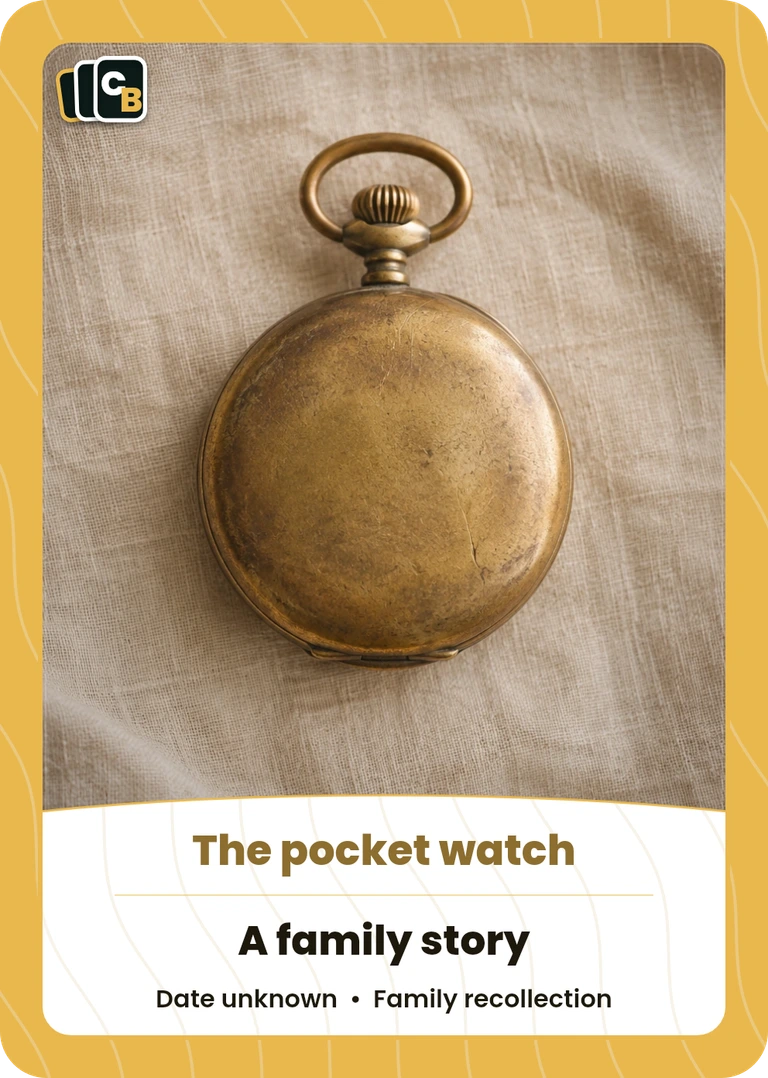
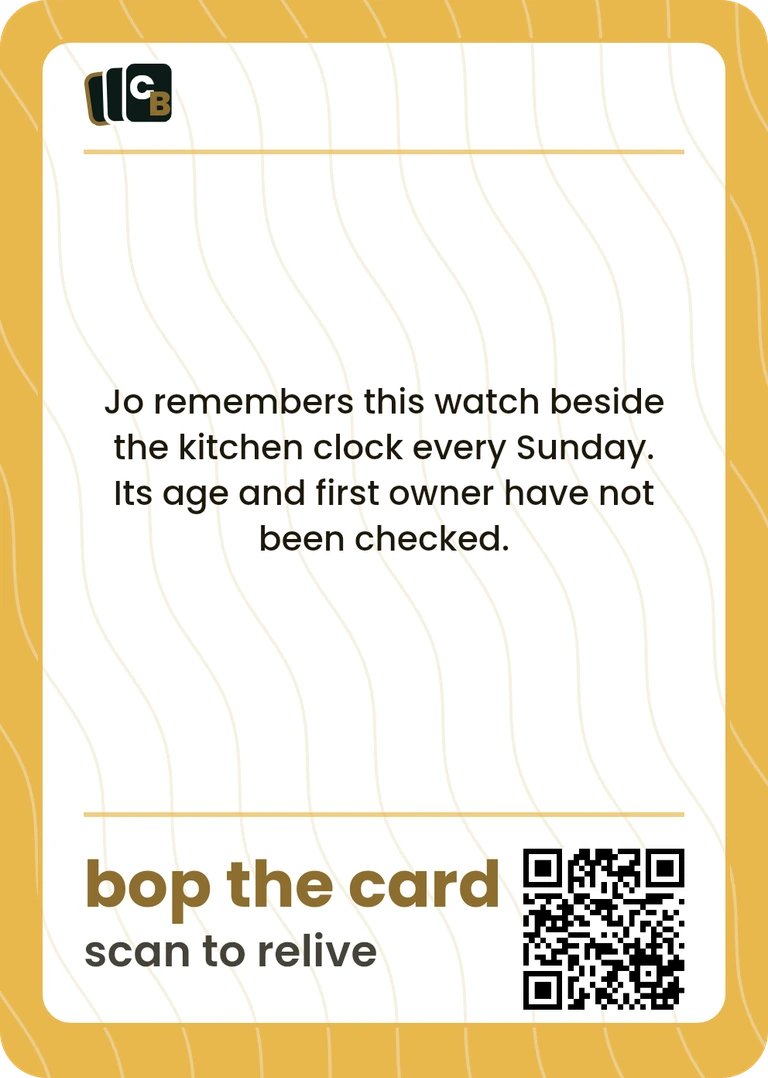
The example names the source of the memory and explicitly leaves the date unknown. Its back carries one specific scene. It does not assign the watch a year, monetary value or verified chain of ownership.
Six prompts for the story behind an object
- What is it? Use a plain description that makes sense without specialist knowledge.
- Who is connected to it? Write a relationship or name only when you know it.
- What do you know about its origin? Include a checked date or place, or leave a clear gap.
- Which moment would you tell someone? Choose a habit, occasion or small remembered scene.
- Where did the story come from? Note the person, photograph or record in your private worksheet.
- What can be shared? Agree on the public-facing wording and intended recipient.
Free browser worksheet. Print it or save a local copy; no email, upload or account needed. It is a planning aid, not a card print file or automatic importer.
Ask someone to read the short version without your explanation. If they can identify the object and say why it matters, the card has enough context. Keep research questions and longer references in the worksheet.
One object. One story worth keeping.
Choose Original, add your permitted image, then enter only the details that help tell this story. The example is inspiration; it does not automatically fill your card.
Free to design · No account needed to start · Preview before ordering.
Map the memory to the actual card fields
| Field | What belongs there |
|---|---|
| Card title | The pocket watch |
| Who / subject | A family story |
| Detail | Remembered by Jo |
| When | Date unknown, or leave it blank |
| Where | A known place, a clear qualification, or blank |
| Back message | One short scene, with the source qualified where useful |
Those are existing Original fields, not automatic object research. Preview the front and back and remove words that crowd the design. For a longer account, After you order, open the card's page and sign in with the email you ordered with to add to it. Add only the context and images you intend recipients to see.
Photograph the object without inventing a history
Use a clear image that shows the whole item against a simple background. Move the camera or light to reduce glare, and leave room around the edges for the card crop. A single recognizable view usually helps more than a collage of tiny details. See the card photo guide.
Keep the original object, documents and source images separately. A Display Card encloses the printed card, not the heirloom. Avoid including private addresses, identifying numbers or valuations just because they appear in your notes. For a relative’s biography instead of an object story, use the family-history guide.
One Display Card is $29.95. If you choose a 10-card Pack at $49.95, plan one object or story per slot; repeated copies count too, and each card can have its own card color within the Pack’s selected style. A card is a memory aid, not an inventory or insurance service.
Why keep the story as well as the object?
FamilySearch describes how accompanying stories help people understand family heirlooms. Its examples provide context for the practice; our worksheet, fictional memory and card design are original. See FamilySearch on keeping heirloom stories alive.
Frequently asked questions
What is an heirloom story card?+
A small keepsake that connects an object to its remembered story: what it is, whose it was if known, and why someone cares about it. It can accompany an object or help share a family memory. It is not an appraisal, ownership record or proof of authenticity.
What should I write if I do not know an object’s age?+
Leave the date blank or write a clear qualification such as date unknown. Distinguish a family recollection from a checked fact, and keep the source in your private notes. You can tell a meaningful story without assigning an age or value.
Can I make a card without giving the heirloom away?+
Yes. A photo and story can be a keepsake of their own. Keep private details out of anything you share, and check that the people involved are comfortable with the image and wording.
Does Cardbop research, value or preserve an heirloom?+
No. You supply the permitted photo and wording. Cardbop does not establish provenance, verify ownership, value antiques or conserve the object. A story card is not a substitute for appropriate original-object care or important records.
Can the longer story go behind the QR?+
Every Cardbop card is a Living Card: the QR code printed on the back opens a page that belongs to that card. You can add a longer story, photos and links using supported Living Card features. After you order, open the card's page and sign in with the email you ordered with to add to it. Keep your source notes separately too.
How much is a story card?+
Designing is free. One Display Card sealed in a clear case is $29.95; a 10-card Pack is $49.95. Check the actual checkout total, shipping and tax before paying.
Should I include an object's serial number, value or storage location?+
Include only details the intended recipient needs and you are comfortable sharing. Keep private identifying details, storage locations, valuations and supporting records in your own planning notes when they are not needed on the card. A story card is not an appraisal or authenticity record.