Guide · The words and the marks
Keep a little of their handwriting
Choose a short note, make a clear image and keep the writer’s original marks visible. Crop a copy with room around the words, check the meaning and permission, then review it at card size. A readable line can carry more feeling than a whole letter squeezed into a tiny space.
Cardbop’s Full Photo style gives your note image the front of the card and your own message the back. Start with a clear image of writing you are allowed to use.
Free to design · No account needed to start · Preview before ordering.
Begin with a short, faithful excerpt
A familiar sign-off, a line of encouragement or a small reminder may be enough. Preserve the exact spelling and marks you choose to show. If an excerpt needs context, add that in your own words on the back rather than altering the original image to say something different.
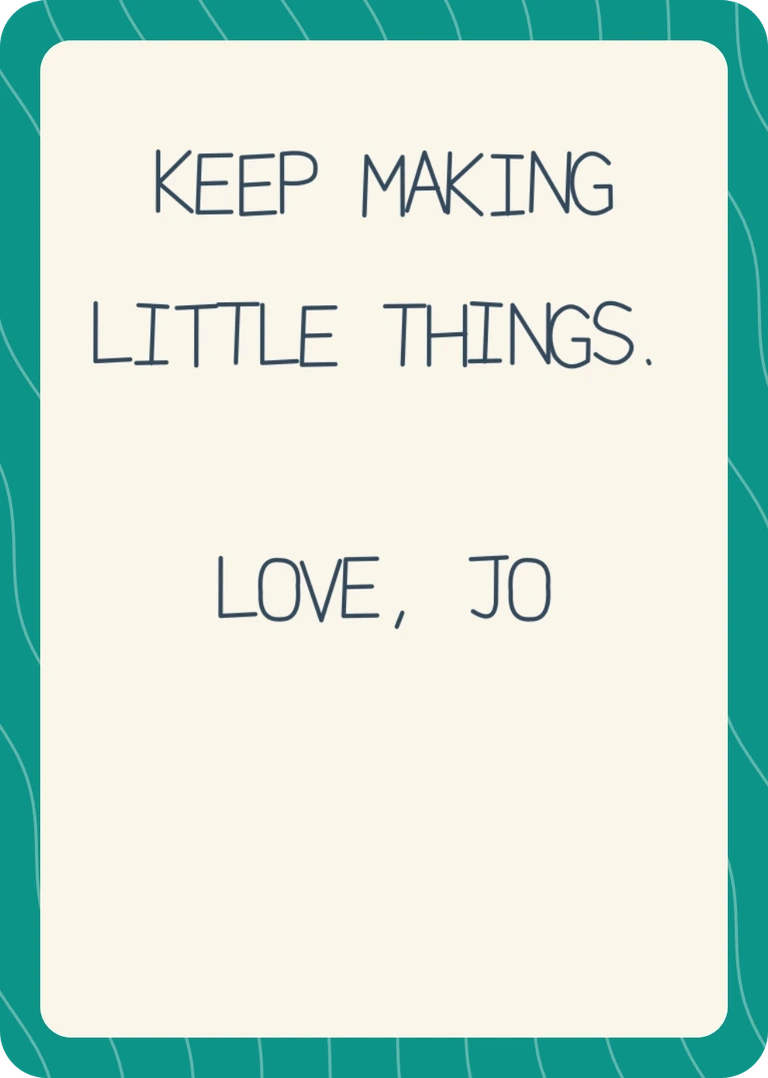
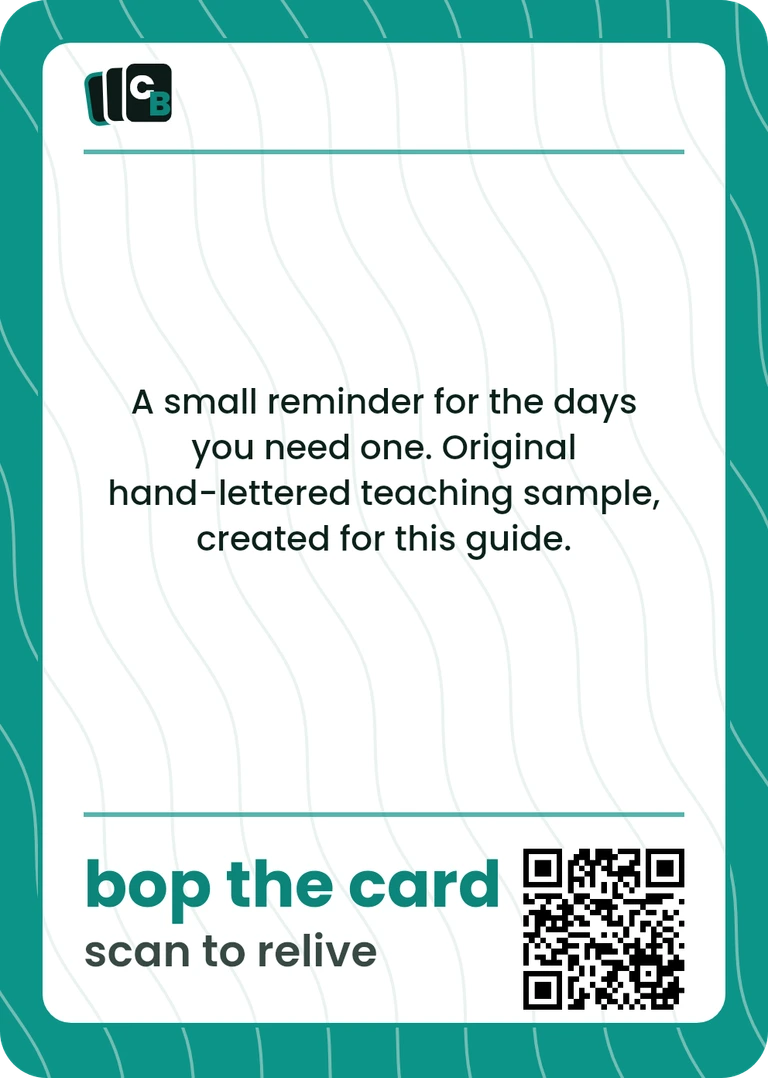
The sample says “Keep making little things. Love, Jo.” It demonstrates a few large lines, generous margins and a separate back message. It is an original drawn example, not a claim that we recovered anyone’s handwriting.
From the source image to a readable card
- Choose the part that matters. Read the whole note first. Keep an excerpt that still means what the writer intended.
- Make a clear copy. Photograph in even light with the camera facing the page. Avoid glare, shadows and fingers over the writing. Keep the original safely stored.
- Crop the digital copy. Leave space around ascenders, descenders and the sign-off. Do not trim the ends of letters to force a tighter fit.
- Review Full Photo. Upload your prepared image, inspect the front and add an optional personal message on the standard back.
- Check at card size. Read every line without relying on a zoomed view. If it is too small, choose a shorter excerpt instead of promising a sharper result.
Free browser worksheet. Print it or save a local copy; no email, upload or account needed. It is a planning aid, not a card print file or automatic importer.
A few words can fill the whole front
Full Photo is the photo-only style. Use your prepared image rather than retyping the note into the title field. This link opens the style; it does not import or rewrite the example.
Free to design · No account needed to start · Preview before ordering.
Compare the source and the selected excerpt
The two views below use the same original drawn lettering. The roomy source shows the whole note; the selected version removes spare paper while retaining all of the words. Your own note may need a different crop. The full-letter and excerpt files are illustration assets, not a document importer.
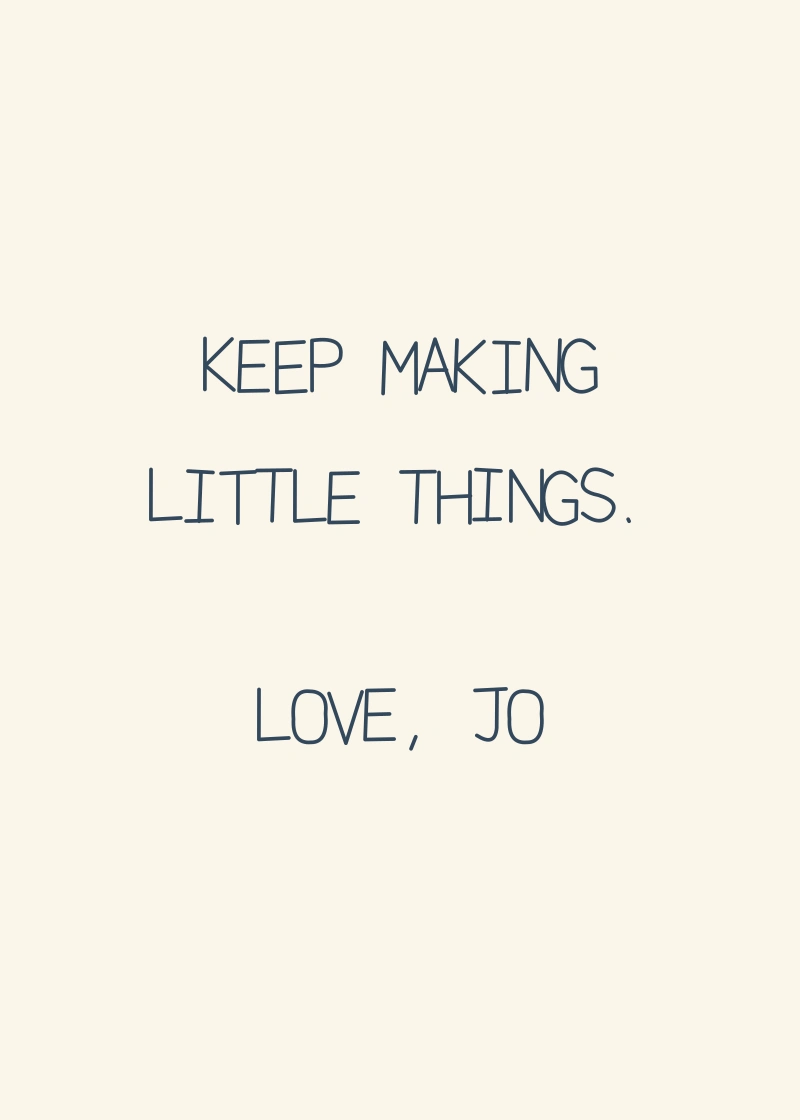
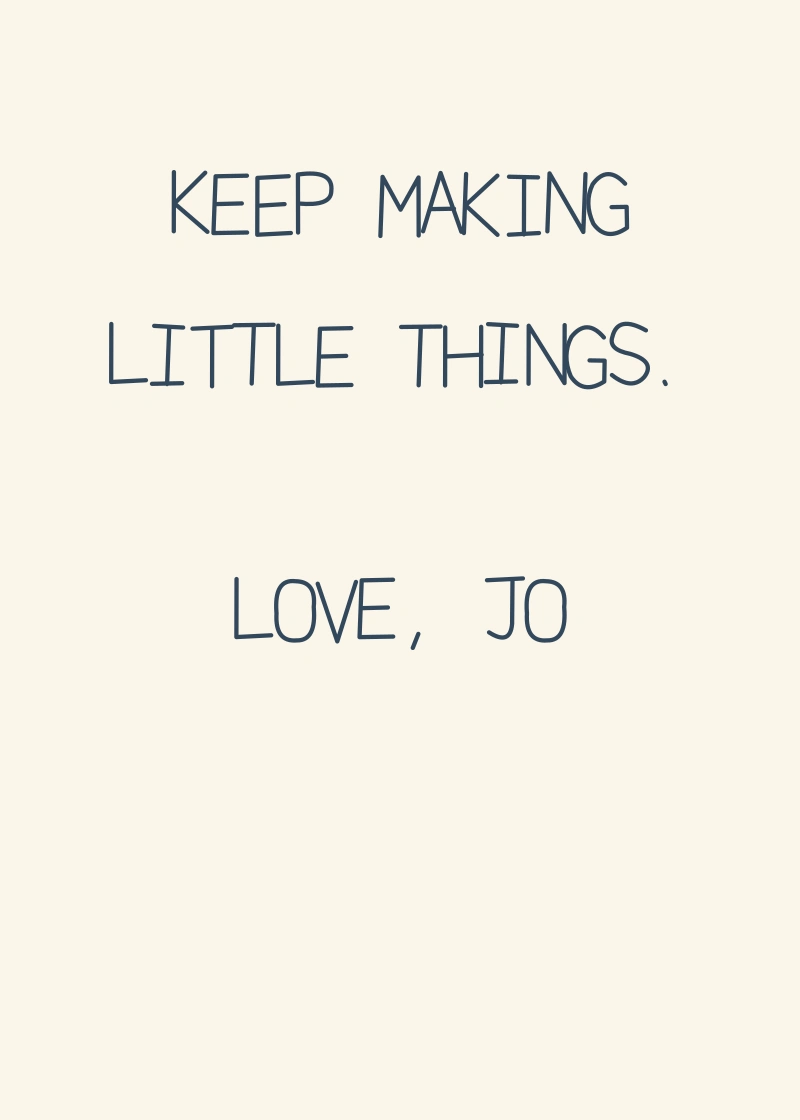
The lettering above is intentionally large. It does not prove that a faint signature, faded pencil mark or tightly written page will reproduce well. Review the exact source you will use, and treat physical print legibility as unverified until a suitable proof exists.
Keep the original, the context and the permission
Make image edits on a copy. Avoid cutting, gluing or marking the original to make it fit a card. The Library of Congress explains careful handling and storage for paper documents; a printed keepsake is not a conservation treatment. See its care guidance for works on paper.
Check who wrote the note, who supplied it and whether you may reproduce and share it. Remove private addresses or sensitive details from the copy you publish. A name in a family story does not automatically make every letter appropriate to share.
A short back message can explain why you kept the note. For longer context, After you order, open the card's page and sign in with the email you ordered with to add to it. Supported Living Card features can hold more story, photos and links. Keep the original full-resolution source separately; do not treat this as a permanent archive or automatic OCR service.
A single Display Card is $29.95; a 10-card Pack is $49.95. The Pack uses one selected style, each card can have its own card color, and each duplicate takes a slot. Review both faces with the before-ordering checklist.
Frequently asked questions
How do I turn handwriting into a keepsake card?+
Choose a short note you have permission to reproduce, photograph it clearly and crop a digital copy without cutting through the writing. Use the Full Photo style for a photo-only front, add your own back message, and inspect both sides before ordering.
Can Cardbop recreate someone’s handwriting?+
No. This workflow uses your image of the existing writing. It does not clone handwriting, transcribe it, restore missing marks or turn typed text into the original writer’s handwriting.
Should I put a whole letter on one card?+
A short, large excerpt is usually easier to review than an entire densely written page. Keep the full original separately. Do not crop a quotation in a way that changes its meaning; ask the writer or relevant rights holder when permission is needed.
Is the note in this guide a real family letter?+
No. It is original hand lettering created for this teaching example. Jo is a fictional sign-off. The source and rendered card are shown openly; neither is a historical letter, customer example or physical print test.
Will a preview guarantee the writing prints clearly?+
No. Inspect the exact image, crop and actual card-sized view. A digital preview cannot establish physical print quality. Tiny, faint or damaged writing may need a different excerpt or a physical proof before making a legibility claim.
How much does the note keepsake cost?+
Designing is free. A single cased Display Card is $29.95; a 10-card Pack is $49.95. Every repeated copy uses a Pack slot. Review shipping, tax and the actual total at checkout.
Should I edit or mark the original letter to prepare the card?+
Work from a digital copy rather than changing the original note. Crop and adjust the copy while keeping the writer's marks and meaning clear. Ask permission where appropriate, and keep the full source separately; a short card image is not a replacement for the original document.