Guide · People behind the family stories
Make family-history trading cards
Choose a photo, a name and one story for each relative, then check the facts with your family. Add a relationship and any verified dates or places. Keep uncertain information clearly labeled, and use a short story that helps someone remember the person behind the name.
Cardbop can turn your prepared images and supported details into a keepsake set. A Pack holds 10 cards; start with one relative and build the collection in the creator.
Start with one card, then build your set. Free to design · No account needed to start · Preview before ordering.
Start with one person and one specific memory
A useful ancestor card introduces a person rather than squeezing a whole biography into a small space. A recipe they shared, the garden they tended or a place they loved can make a conversation easier to start. Ask relatives what they remember, then separate their recollections from details supported by records.
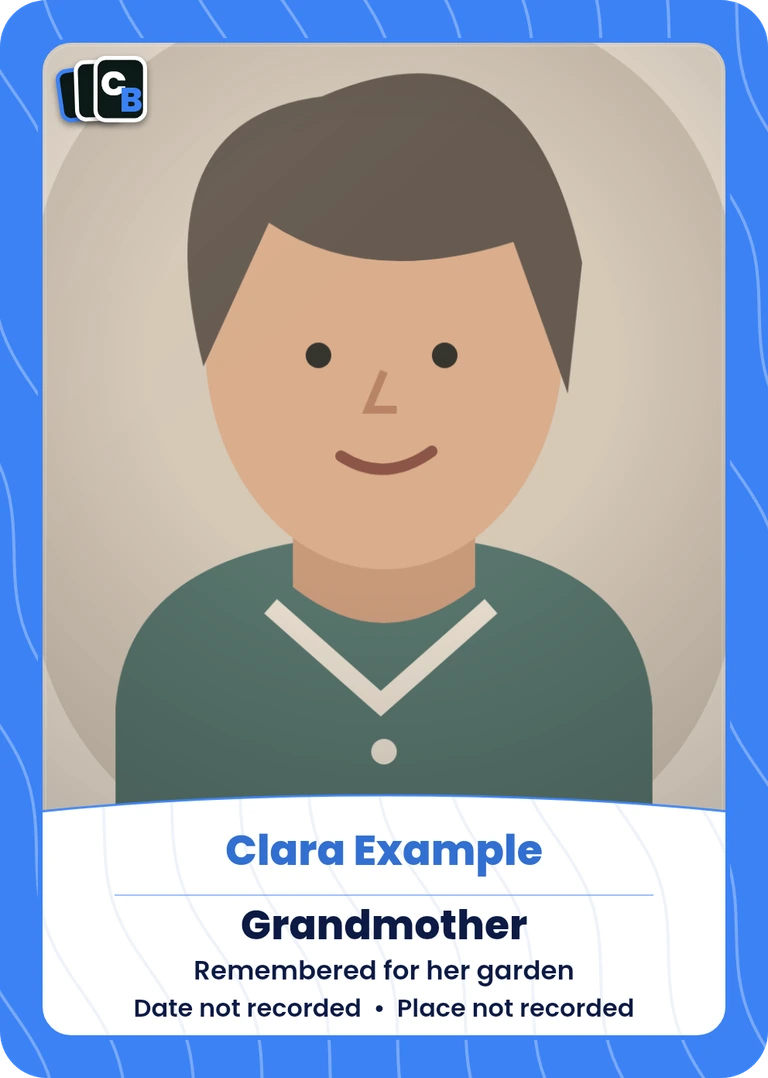
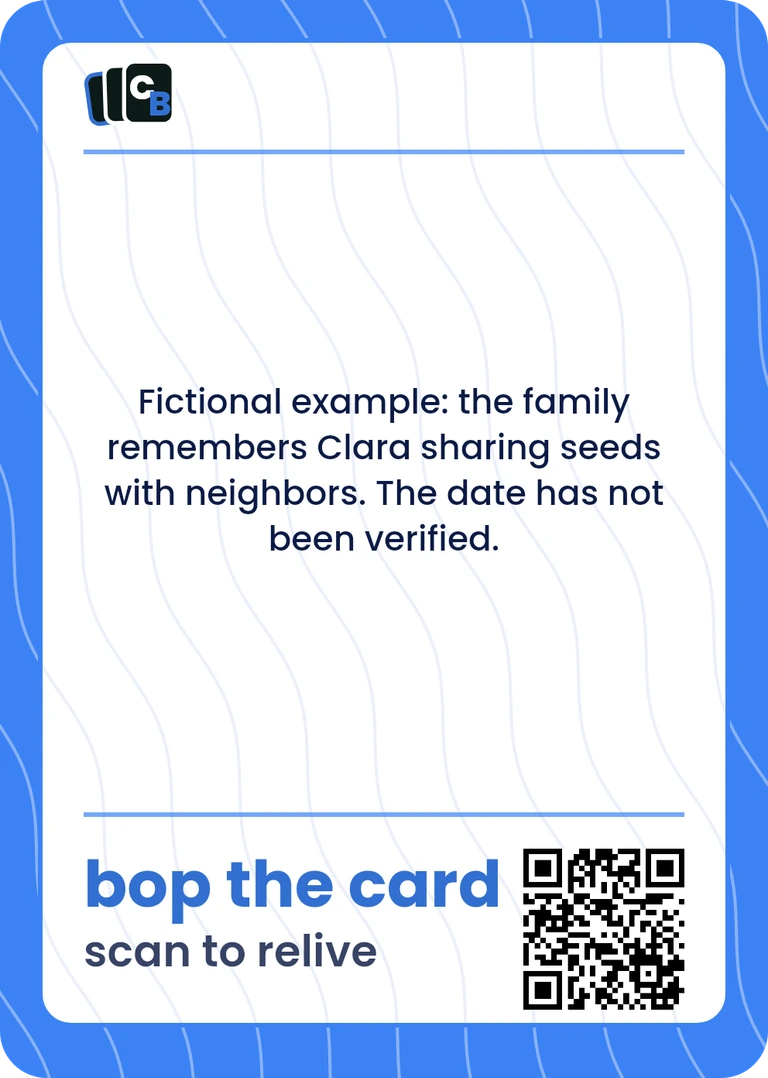
In this example, the name and relationship introduce Clara. The short note is labeled as a fictional recollection, while the missing date and place stay unrecorded. On your card, use your own wording; this example is not imported when you start.
Keep the facts and the stories separate
Verified detail
A date or place supported by a record you have checked. Keep a reference in your private notes.
Family recollection
A memory someone shared. Attribute it where useful: “Aunt Jo remembers…” rather than presenting it as a researched fact.
Not yet known
Leave the field blank or write a clear qualification. An honest gap is better than a confident invented answer.
Choose respectful wording with the people involved, especially for living relatives. A public example does not need private contact details or sensitive family information. Keep source references and research questions in a planning file rather than forcing them onto the card.
Use the family-story worksheet
- Choose the subjects. List people, places or moments you want the set to introduce.
- Match each row to an image. Work from a digital copy you own or have permission to use. Keep the original photograph safe.
- Write a short introduction. Add a name, relationship, known dates or places, and one specific story.
- Review the evidence. Note who supplied the memory, which facts were checked and what remains uncertain.
- Review permission and spelling. Check the image, the wording and who will see the finished cards.
The downloads require no email or upload. The CSV opens in a spreadsheet app; the printable sheet opens in a browser. They are planning aids, not printable trading cards, genealogy software or Cardbop import files.
Your first story is ready to become a card
Keep the worksheet beside you, add an authorized image and use the fields available in the Family style. Preview the front and back before continuing.
Start with one card, then build your set. Free to design · No account needed to start · Preview before ordering.
Map the story to the actual card fields
The Family style provides Name, Role, Known for, Since and Hometown fields, plus an optional back message. Use only the fields that suit the information you have. “Since” is not a requirement to invent a birth year. Check how every entry appears in the live preview.
- Front: a name and relationship, with a short detail that helps relatives recognize the story.
- Back: a brief memory or note, with a qualification when the source is uncertain.
- Longer context: use supported Living Card story, photo and link features when appropriate; the printed message area is not an unlimited biography.
If an old scan looks soft or cropped, consult the photo guide. Cardbop does not recover missing image detail or verify historical accuracy.
Plan the whole set, then share the stories
A Pack contains 10 cards, with one selected style, individual card colors and a separately chosen wrapper color. You might choose different relatives, different chapters in one person’s life, or a mix. A repeated design still takes one slot. This sample shows one fictional card, not a completed customer Pack or a standard playing-card deck.
At a gathering, invite someone to pick a card and tell a memory, explain a relationship or add a question for the next family conversation. You do not need to assign people rarity, value or rankings. A keepsake can be meaningful without turning a relative into a score.
Review every front, back and numbering choice with the before-ordering checklist. A Pack is $49.95; a single cased Display Card is $29.95. Check the actual checkout total and delivery information for your order.
Further reading
Ancestor-card projects have a history outside Cardbop. See Connect the Dots Genealogy’s own project account for one approach. Our worksheet and illustrated example are original; we do not reproduce its cards or templates.
Frequently asked questions
What are family-history trading cards?+
Small cards that introduce a relative through a photo or illustration, a name, their relationship to the family and a short story. They can help relatives share memories or start conversations; they do not replace family records or a researched family tree.
What should I put on an ancestor trading card?+
Choose a name, relationship and one specific memory. Add dates or places only when you can support them. Keep longer source notes in your private planning sheet, and check that you have permission to use the photo and story.
What if I do not know a date or have a photograph?+
Leave an uncertain date blank or label it as approximate or unverified. Use your own or permission-cleared illustration if you lack a photo, and label it as an illustration. Do not invent a date or present an imagined portrait as a real photograph.
Can I import a family tree or the worksheet into Cardbop?+
No. The worksheet organizes your choices; it is not an importer. Add your selected images and supported details manually in the creator. Cardbop does not research genealogy or automatically restore old photographs.
How many cards belong in a family-history Pack?+
A Cardbop Pack contains 10 cards. Plan one person or moment per card, or use separate cards for different stories about the same person. Each copy also occupies a slot. Review all cards before ordering.
How much does a family-history keepsake cost?+
Designing is free. A 10-card Pack is $49.95; one Display Card sealed in a clear case is $29.95. Check the actual order, shipping and tax before paying.
Can a family-history card include living relatives?+
Yes, with their permission and wording they are comfortable sharing. Check spelling and sources, distinguish recollections from verified facts, and avoid unnecessary private dates, addresses or contact details. Decide who should be able to open the associated online page.