Guide · More than the ingredients
Keep the story behind the family recipe
Choose one dish, name the person or source connected to it, and tell one specific memory. Put that short story beside a permitted photo. Keep the complete ingredients and instructions separately, where the next cook can read them in full.
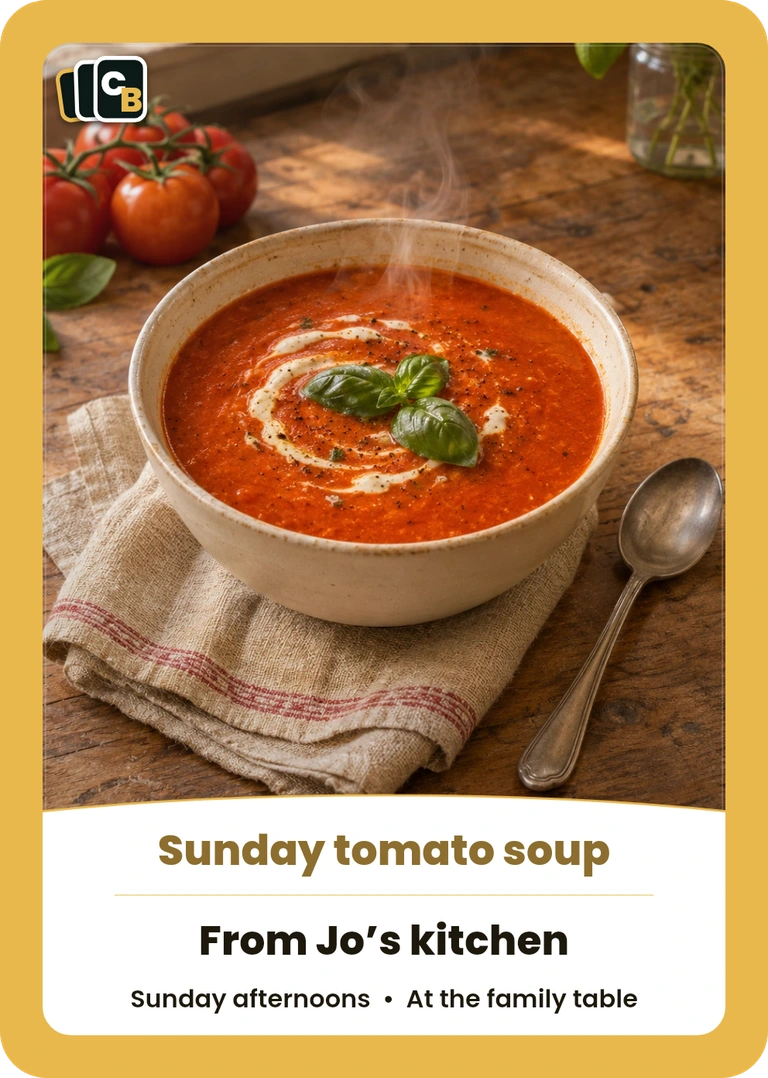
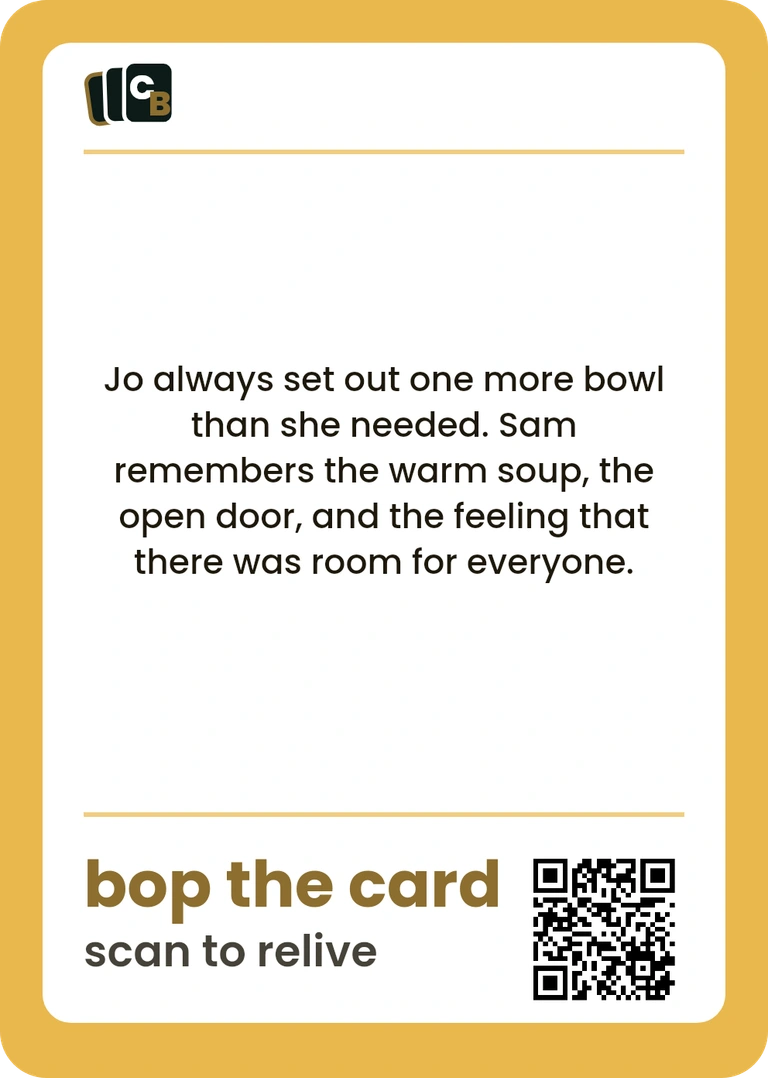
Cardbop can turn your food photo and a brief memory into a personal trading-card keepsake. Use the existing Original fields; this is a story about a recipe, not a custom cookbook or full-page recipe format.
Free to design · No account needed to start · Preview before ordering.
Start with the person, not a list of measurements
A recipe tells someone how a dish is made. A recipe story explains why this version matters to you: the extra bowl set out on Sundays, the pan borrowed every holiday, or the cousin who finally wrote down a method everyone else learned by watching. That is the detail a small card can introduce.
The Library of Congress explores collecting recipes alongside family memories in its family-recipe collection guide. Our worksheet and fictional example below are original teaching materials; they do not reproduce the Library’s recipes or document a real customer’s family.
Ask six questions before you write
- What does your family call the dish? Record the name people recognize, even if it is a nickname.
- Who made or shared this version? Separate the person you learned it from from any claim about who invented it.
- When did it appear? Choose a remembered gathering or ordinary routine rather than guessing its age.
- What small detail belongs to that scene? A sound, serving habit, handwritten correction or familiar expression can give the story its own voice.
- What can you share? Ask about names, photographs, quotations and a recipe someone regards as private.
- Where is the complete recipe? Identify the checked document, image or link the recipient will actually use.
Free printable planning sheet. Open it in your browser, then print or save a local copy. No email, upload or account needed. This worksheet is a planning aid, not a card print file or automatic import.
Keep the answers in the worksheet before editing. It is a planning aid, not an upload form or Cardbop import file. Let the contributor review their own words before you share them. If the family would rather keep the story within a small group, choose that audience before making copies.
A bowl of soup, and the invitation behind it
In this fictional example, Sam remembers Jo setting an extra bowl on the table every Sunday. The card does not need to claim an old regional origin or print the cooking method. Its subject is the welcome Sam remembers.
Keep on the printed card
“Jo always set out one more bowl than she needed. Sam remembers the warm soup, the open door, and the feeling that there was room for everyone.”
Keep with the complete recipe
The checked ingredients, quantities, preparation method, contributor credit, version date and any uncertain transcription. Those details should remain readable and complete.
If two relatives remember the method differently, record both accounts before resolving the recipe. You can attribute a memory without presenting it as the only correct version. A story card should not silently change someone’s words to make the history sound more certain.
Map the story to existing card fields
| Field | Example |
|---|---|
| Card title | Sunday tomato soup |
| Who / subject | From Jo’s kitchen |
| When | Sunday afternoons |
| Where | At the family table |
| Back message | A short memory of Jo’s welcome |
You do not need to fill every optional detail. Use the wording that fits your own memory and review the actual front and back. The creator does not research recipe origins, transcribe handwritten pages or automatically import this example.
Give one familiar dish a story of its own
Choose a permitted image, add your short introduction and inspect the supported layout. A photograph of the dish, a meaningful utensil or a recognizable place at the table can each introduce a different story.
Free to design · No account needed to start · Preview before ordering.
Make the photograph and the longer recipe useful
Choose one recognizable subject and leave room around it for the crop. A full recipe page photographed from far away may become illegible on a small card. Keep the original sheet and a readable digital copy, then choose a food photo or a carefully selected detail for the keepsake. See the handwritten-note guide for planning around handwriting.
If you choose a QR-enabled card, you can add supported longer context to its Living Card. After you order, open the card's page and sign in with the email you ordered with to add to it. Test any external recipe link as the intended recipient and retain a separate copy. Online edits do not change the printed photo or message.
For a collection, plan 10 distinct memories or intentional duplicates in one Pack. A Pack uses one selected style; each physical copy occupies a slot. One cased Display Card is $29.95; a Pack is $49.95. Product prices are before applicable tax and shipping. Standard US Ground Shipping is $7.99 per order unless an eligible offer changes it. Review the total and any accepted code before payment.
Frequently asked questions
What is a family recipe story card?+
A small keepsake about the person, occasion or memory connected to a dish. It pairs a permitted photo with a short caption. It is different from a full recipe card containing ingredients, measurements and cooking instructions.
What should I write on a recipe memory card?+
Name the dish, credit the person or source you know, and describe one specific scene or habit. Ask whose memory it is, when the dish appeared and what made that occasion recognizable. Keep uncertain origins clearly qualified.
Does Cardbop print a complete recipe or import a cookbook?+
Cardbop offers supported photo-and-text card layouts, not a cookbook importer or a specialist recipe-card format. A long ingredient list or method may not fit. Keep the complete checked recipe separately and use the printed card for a short story.
Can I include a handwritten recipe?+
You can use a digital image you have permission to use, but full pages of handwriting may become too small at card size. Keep the original and a legible full-size copy; a food photo or a short permitted detail may work better on the keepsake.
Can the longer recipe go behind the QR code?+
If you choose a QR-enabled card, its Living Card can hold supported story text, photos and links. After you order, open the card's page and sign in with the email you ordered with to add to it. Check access to anything you link. The printed card does not change when you edit the online page; keep a separate copy of the complete recipe.
How much does a family recipe keepsake cost?+
Designing and previewing are free. One Display Card sealed in a clear case is $29.95; a 10-card Pack is $49.95. Product prices are before applicable tax and shipping. Standard US Ground Shipping is $7.99 per order unless an eligible offer changes it. Review the total and any accepted code before payment.