Guide · The maker and the meaning
Give the story with the handmade gift
Photograph the finished piece and write who made it, why it was made and one detail you want remembered. A short story card can travel with the gift, giving the recipient a little context to keep after the wrapping is gone.
Cardbop’s Original style can pair your finished-project photo with a brief introduction and a personal message on the back. Start with one piece and one reason it matters.
Free to design · No account needed to start · Preview before ordering.
Tell the part the recipient cannot see
The object shows its color, shape and texture. Your story can explain why you chose them: the reading corner you imagined, the pattern you learned together or the small detail you changed for this person. Specific context makes a gift personal without requiring an account of every hour spent making it.
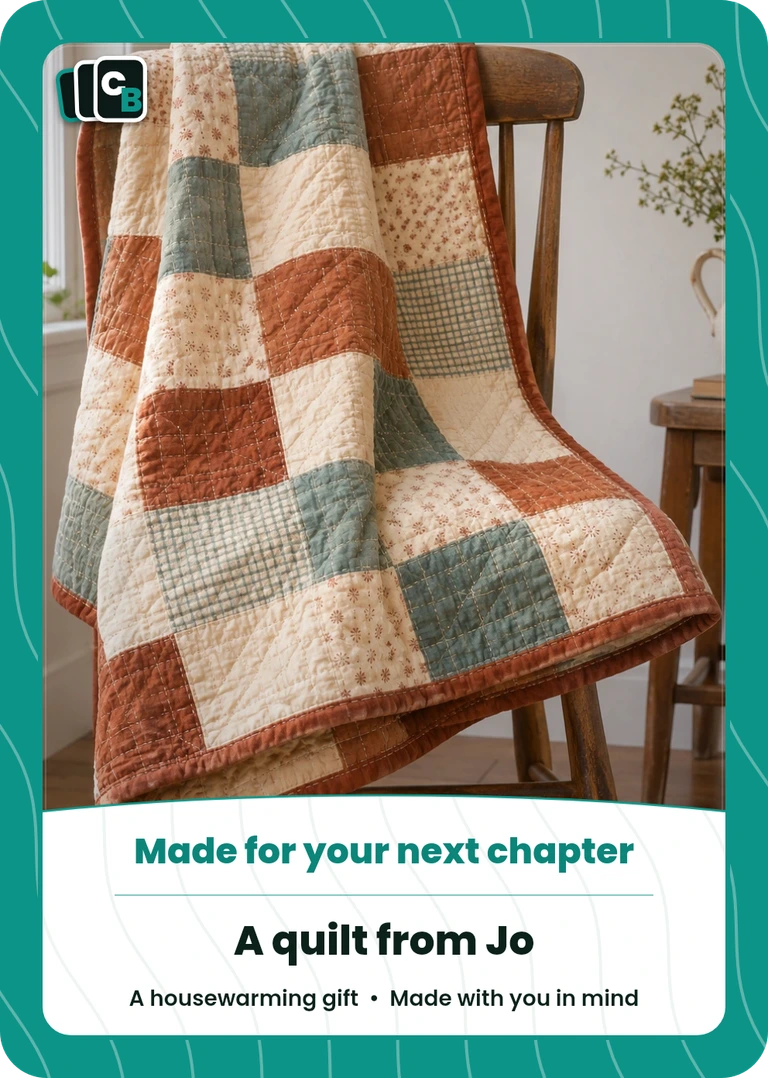
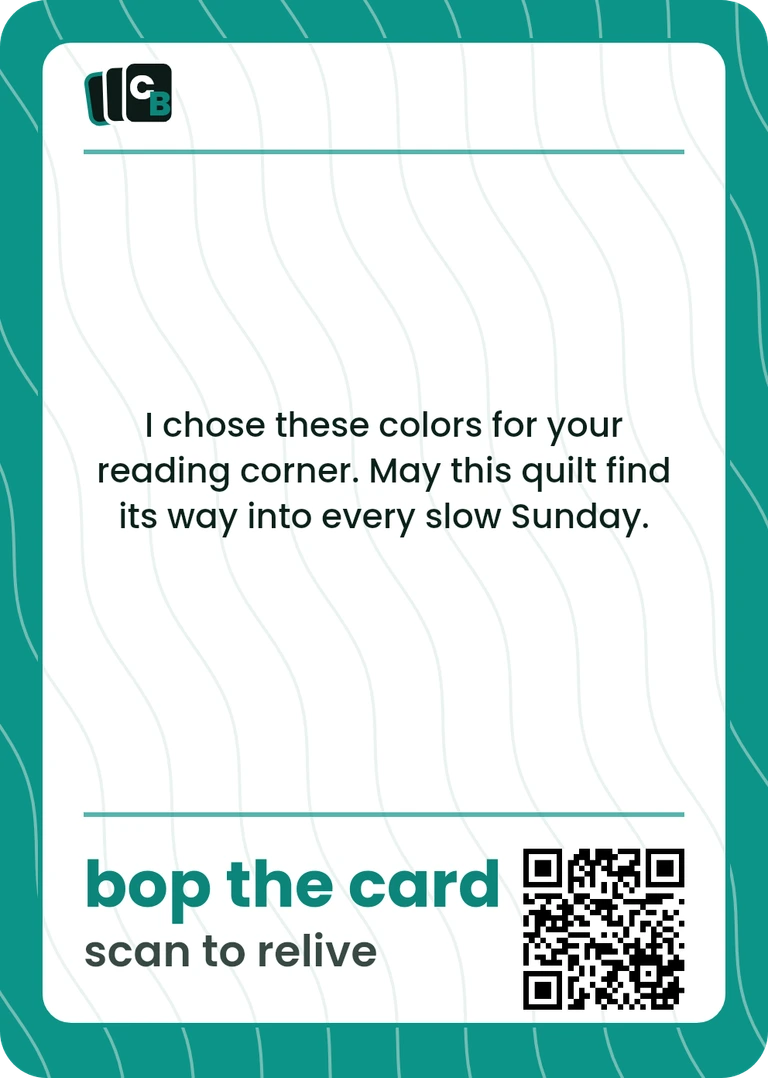
The example’s message connects the colors to an imagined reading corner. It does not claim a fabric composition, a construction method or a wash setting. For your own work, include only details you know are true.
A maker-story worksheet that works across projects
- Maker: who made the piece, and how would they like to be named?
- Piece: give it a short name or simple description.
- Recipient and reason: say who it is for and why this gift fits them.
- One making detail: choose a color decision, process memory or something learned.
- Date and source: record a known completion date and keep verified materials or care references separately.
- Image and message: choose a permitted photo and a short line to carry with the gift.
Free browser worksheet. Print it or save a local copy; no email, upload or account needed. It is a planning aid, not a card print file or automatic importer.
For a quilt, the detail might be why you chose a color. For woodwork, it might be who helped design the shape. For a ceramic piece, it might be a memory from the making. These are writing prompts, not claims about any particular object’s materials or safety.
Keep a little of the making with the gift
Use Original to introduce the piece and its maker. Add the personal note on the back, then inspect both sides. The sample does not prefill your fields or create a project archive.
Free to design · No account needed to start · Preview before ordering.
From the project to the front and back
Front photo
Show the complete object clearly. Leave crop room and avoid a busy setting that hides the piece.
Front introduction
Use the title and who fields to name the piece or maker. Use detail, when and where only if they help.
Back message
Explain the reason for the gift or a moment from making it. Keep the wording short enough to review comfortably.
Save close-ups and process images separately. After you order, open the card's page and sign in with the email you ordered with to add to it. Supported Living Card features can add further photos, a longer account and external links. That is different from an automatic photo collage or a materials-recognition tool.
If the work itself is a drawing you want to reproduce as card art, the art-to-card guide covers that separate task. This guide tells the story of a completed object accompanying a gift.
Keep story, care information and documentation distinct
A paper card can accompany a quilt or another gift. It is not a sew-in, heat-resistant or washable label. Put essential care information where the recipient can reliably find it, and verify it against the actual object and materials rather than copying instructions from a different project.
The Quilt Alliance recommends documenting quilts with labels, photographs and stories. Its quilt-documentation guidance provides useful task context. Our worksheet is original and does not reproduce its forms or replace specialist documentation.
Ask the maker and photographer before sharing their work or story. A single Display Card is $29.95. A 10-card Pack at $49.95 can hold multiple gifts or copies, with one selected style and individually chosen card colors; each copy counts toward the set. Neither format verifies craftsmanship, provenance or value.
Frequently asked questions
What should I write with a handmade gift?+
Name the maker and recipient if appropriate, explain why you made this piece, and choose one process detail or memory to share. Add the finish date only when known. Keep care instructions accurate and separate from an invented story about the materials.
Can a story card accompany a quilt, ceramic or woodworking gift?+
Yes. Use your own permitted photo of the completed object and details that fit the available fields. The card can accompany the gift; it is not a washable fabric label, a materials certificate or a guarantee about the object’s care.
Does Cardbop have a special quilt or craft template?+
This example uses the existing Original style with its photo, title, who, detail, when and where fields. It does not add a craft-specific form, detect materials or automatically arrange project photos.
Is the quilt example a real customer’s project?+
No. The quilt photograph is AI-generated concept imagery, and the maker, recipient and message are fictional. The card is rendered with Cardbop’s actual layout. It does not demonstrate real sewing, materials, craftsmanship or physical print quality.
Where can I put more process photos?+
Choose one clear front image. Supported Living Card features can add more photos, a longer story and external links after ordering. After you order, open the card's page and sign in with the email you ordered with to add to it. Keep your original project files separately.
How much does a handmade-gift story card cost?+
Designing is free. One cased Display Card is $29.95; a 10-card Pack is $49.95. Pack copies each use a slot. The Pack uses one selected style; each card can have its own card color. Check the actual checkout total, shipping and tax.
Is this a washable care label or a label I sew into the item?+
No. It is a separate trading-card keepsake that can accompany the gift. It is not a tested washable, heat-resistant or sewn-in product label. Put required care information in an appropriate separate format and use the card for the permitted story and photos.