Imagine
An original character
Explain how its appearance, name and actions belong to the same story.
Guide · Make something worth explaining
Ask students to choose an image, explain a few meaningful details and share what they learned. Try an original character, a science observation or a class memory. Separate checked facts from imagination, and use a planning sheet before making the cards. Each project can begin on paper.
For selected original artwork or a finished class keepsake, Cardbop offers an optional printed-card route. The activities and planning sheet remain useful without buying cards.
Free to design · No account needed to start · Preview before ordering.
Imagine
Explain how its appearance, name and actions belong to the same story.
Observe
Record what you can see, then check a source before identifying the subject or adding facts.
Reflect
Describe a shared moment and the contribution or lesson you want to remember.
These are original planning suggestions, not classroom-tested lesson results or a standards-certified curriculum. Choose the amount of writing, materials, support and sharing format for your learners. A hand-drawn paper card is a complete outcome in its own right.
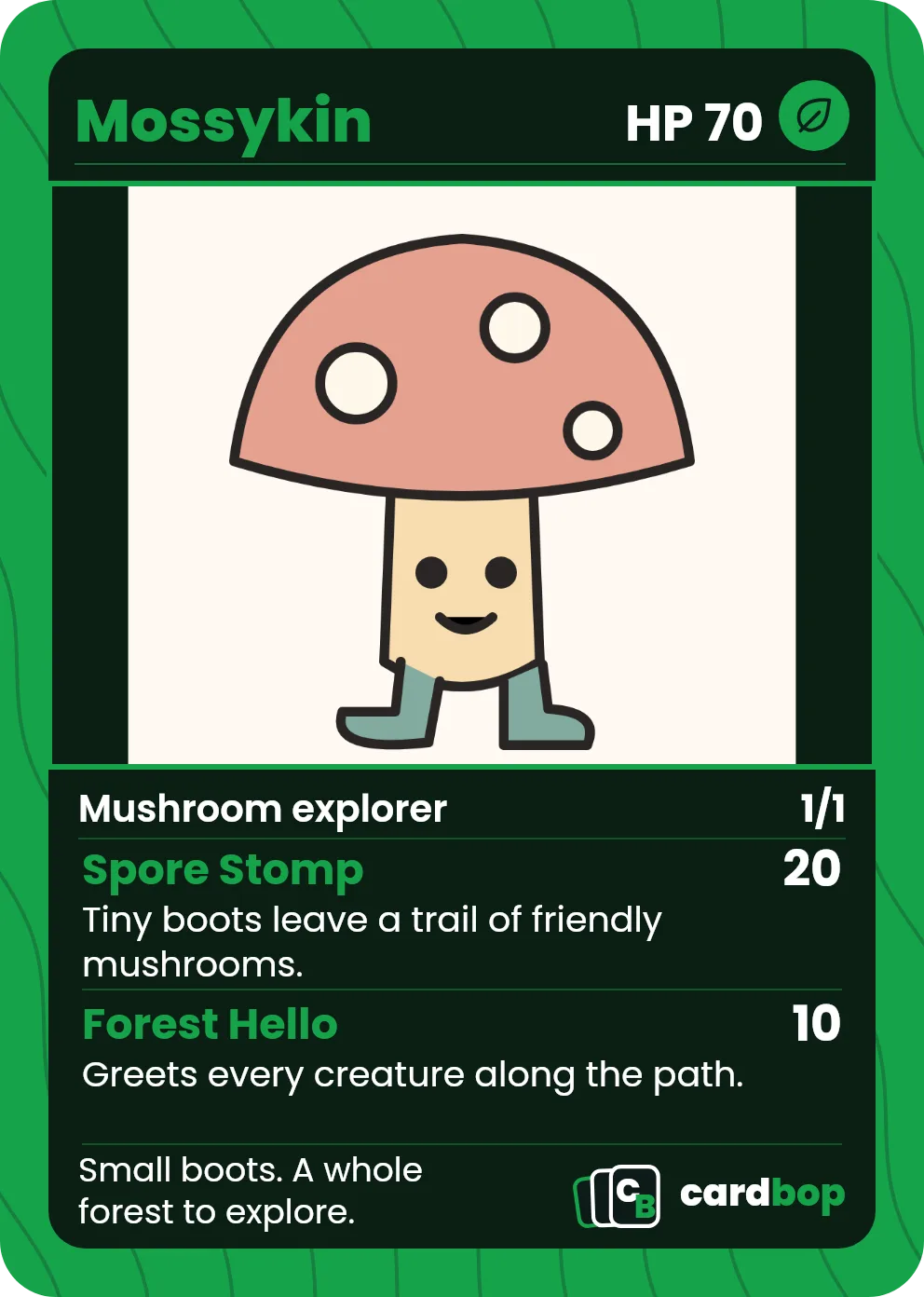
Concept example · Original illustration shown as a card render.
Start with a character the student invented. Ask for a name, a drawing, two actions and a short sentence that gives the character personality. The explanation matters more than a complicated game system.
Mossykin’s tiny boots and forest story are one illustration of that connection. Students should create their own wording and artwork. Use the original drawing prompts or flavor-text guide for a starting point.
If an adult chooses a printed keepsake, upload an authorized image and enter the supported name, HP, type, abilities and flavor text. Cardbop prints the uploaded art; it does not redraw it or create a playable official game card.
Free to design · No account needed to start · Preview before ordering.
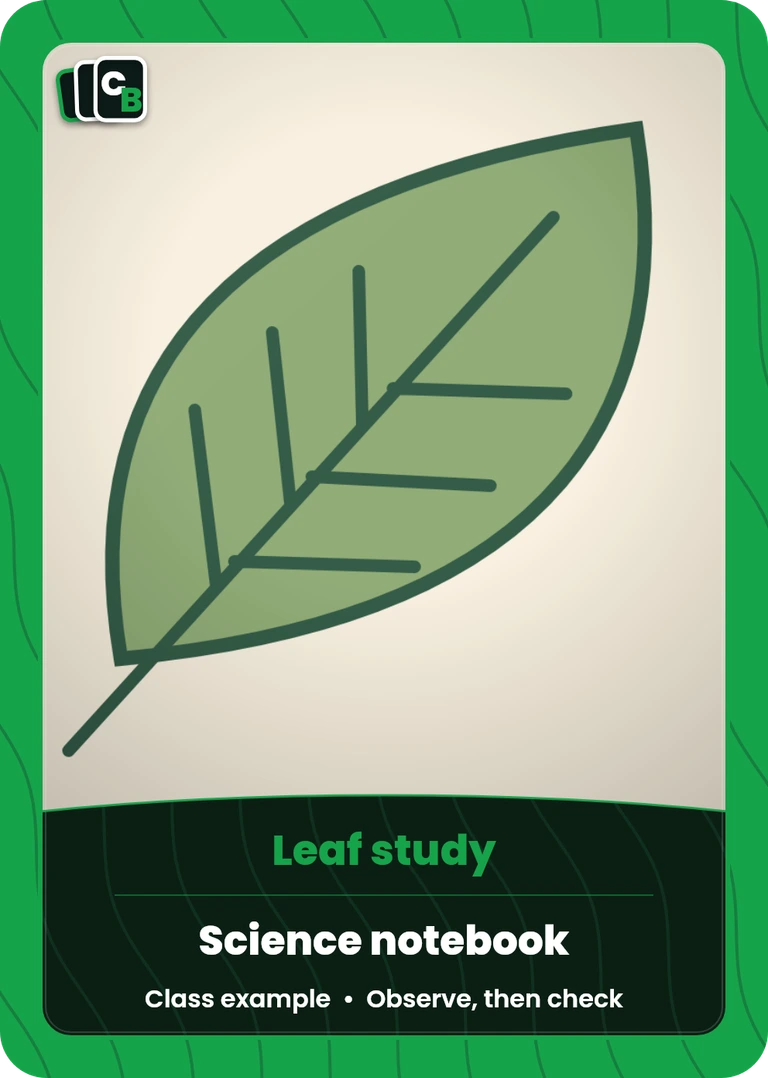
Use a subject learners can observe appropriately, such as a leaf in an allowed outdoor space. Draw or photograph it without disturbing protected plants or wildlife. Record the shape, visible markings and where the observation happened, then consult a suitable reference before adding a species name or factual claim.
The illustrated card models the process, not a biological identification. Ask students to say what they observed, what a source tells them and what they still do not know.
Choose a shared experience such as growing a class garden, presenting a project or helping a new classmate. Ask each learner to choose one detail, describe a contribution and write a short reflection. A drawing can work when a photograph is unavailable or inappropriate.
For example, a fictional reflection might read: “We checked the seedlings each morning. I learned to notice small changes.” Make the actual wording the learner’s own. Discuss how the work will be shared and obtain suitable permissions before using identifiable photos or personal details in a printed or shared keepsake.
The original sheet includes the subject, image plan, key details, source notes, permission check and a short reflection. No email or upload is required; it does not create card artwork or import class data into Cardbop.
If you choose printed Cardbop cards, plan all 10 slots per Pack, including copies, and check every preview. A Pack costs $49.95; one cased Display Card costs $29.95. The creator is not a classroom dashboard, CSV importer or instant-print station. See the teacher keepsake page for the existing product route.
Trading cards are also used in literacy lessons. ReadWriteThink publishes a character-card lesson. The projects and worksheet here are original suggestions, not an endorsement, adaptation of its teaching materials or permission to print copyrighted characters.
Give students a clear subject, a small set of details to explain and a way to share their work. Ask them to distinguish observation, checked facts and invented story. They can make paper cards; a purchased printed card is optional.
Create an original character from a student's own story, record a plant or animal observation using checked information, or reflect on a class memory with appropriate permission. Adapt the task and amount of writing to your learners.
No. The planning activities can be completed on paper without using Cardbop. If an adult chooses to create printed keepsakes, Cardbop is an optional separate route; this guide does not provide student accounts, classroom management or automatic class imports.
Use original characters, photos or artwork you own or have permission to use. This guide does not grant permission to reproduce franchise characters, and a classroom discussion activity is not permission to manufacture copyrighted character cards.
No. It is a planning and review sheet. It does not generate card artwork or upload class data. Keep it beside the creator if you choose to enter selected images and details manually.
Count every physical card, including copies. A Cardbop Pack holds 10 cards and costs $49.95. A single cased Display Card costs $29.95. Decide the quantities and obtain suitable permissions before ordering; do not assume bulk discounts or instant classroom printing. Product prices are before applicable tax and shipping. Standard US Ground Shipping is $7.99 per order unless an eligible offer changes it. Review the total and any accepted code before payment.