Meeting places
A hall, market and park: how did people use each place?
Guide · Community stories
Choose a small community theme, connect each card to a source and tell one supported story at a time. A building, meeting place or local event can become a card with a permitted image, a short explanation and an honest date. Keep fuller evidence and unresolved questions in a companion worksheet.
Make the project on paper, or turn your permitted image and checked wording into a printed Cardbop keepsake using the Original style.
Free to design · No account needed to start · Preview before ordering.
Try “Where did our neighborhood gather?” rather than “Everything about our town.” A small question helps a library group, community club or classroom choose connected subjects. Three well-supported cards can be a complete paper project; a larger collection can follow when the evidence is ready.
A hall, market and park: how did people use each place?
Compare permitted images from different dates without assuming why every change happened.
Use programs, photographs and attributed recollections to tell different parts of one occasion.
Assign a researcher, writer and second reader, or take those roles in turn. Agree on who will see the finished collection before gathering personal stories. For a relative's life rather than a community place, use the family-history card guide.
For each proposed card, record the item's creator, date, holding collection or owner, reference/link, and what it actually shows. A photograph can establish that a structure was present when the picture was taken; it does not automatically establish its opening date, architect or everyday use.
The Library of Congress analysis resources encourage learners to examine details, consider interpretations and ask further questions. The National Archives document-analysis worksheets help put different source types in context. Use those resources alongside your own project notes.
When accounts conflict, preserve both in the notes. Choose a narrower sentence for the card instead of turning a plausible story into a fact. Retain an item identifier or short source credit on the card when it helps readers reconnect the story to its evidence.
Free printable planning sheet. Open it in your browser, then print or save a local copy. No email, upload or account needed. This worksheet is a planning aid, not a card print file or automatic import.
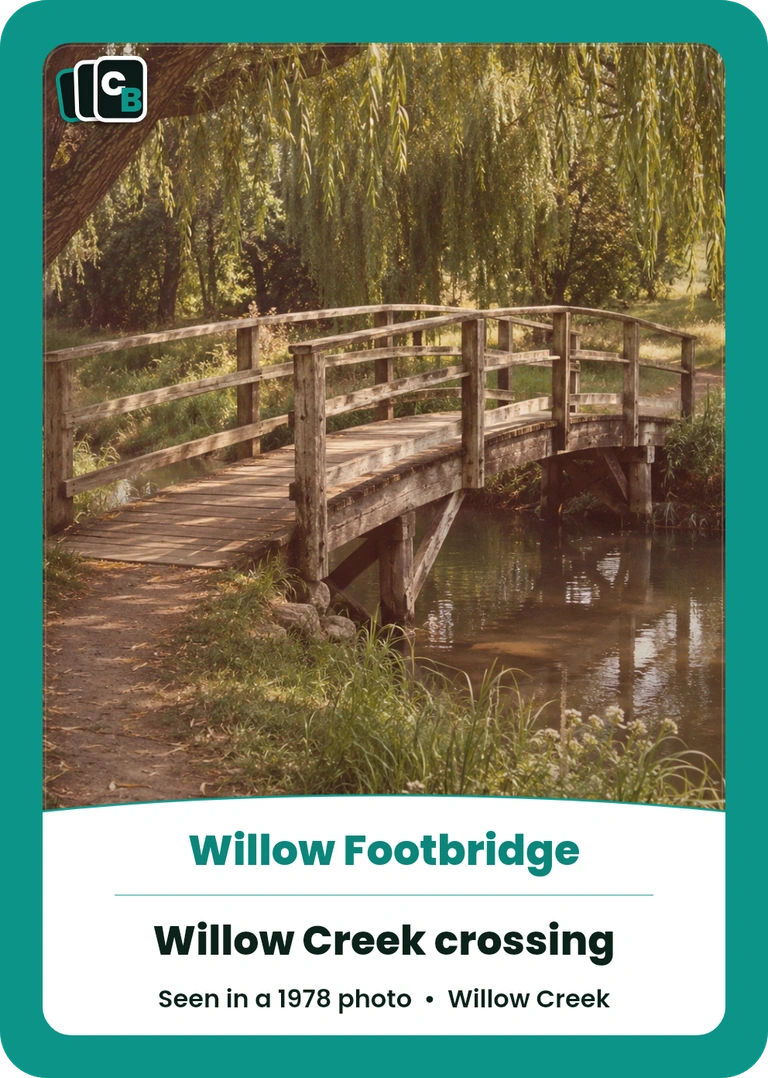
Willow Footbridge and this project's sources are invented teaching examples. Imagine a dated photograph showing the bridge in 1978 and a resident remembering walks there later. The photograph supports “seen in a 1978 photo.” Neither item establishes when the bridge opened.
| Field | Example wording |
|---|---|
| Card title | Willow Footbridge |
| Who / subject | Willow Creek crossing |
| When | Seen in a 1978 photo |
| Where | Willow Creek |
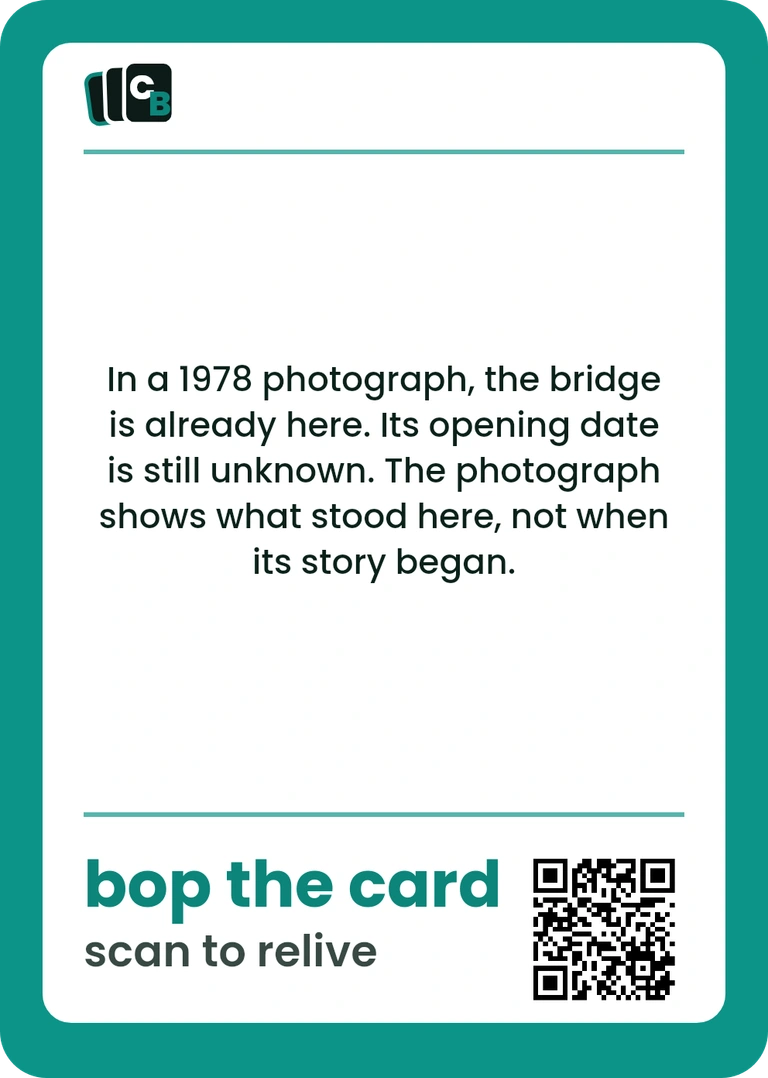
| Back message | In a 1978 photograph, the bridge is already here. Its opening date is still unknown. The photograph shows what stood here, not when its story began. |
Field labels organize a layout; they do not verify a claim. Shorten your wording in the preview and inspect both faces. Keep a fuller caption, reference and the unresolved opening-date question in the worksheet rather than making the printed text too small.
Start with an image you may reproduce and a sentence you can support. Choose Original, enter the details manually and review both sides. The fictional example is a reference, not a design that automatically fills your card.
Free to design · No account needed to start · Preview before ordering.
A downloadable image is not automatically cleared for your use. Read the item's rights/access information and ask the holder when necessary. Record the image credit and agreed reproduction uses before ordering or sharing. A photo you take today or an original illustration can work when a historical image cannot be used; label what the new image represents.
For oral histories, explain the project and intended audience before asking to quote someone. Confirm the selected wording and name credit with the contributor. Keep private contact details and sensitive material out of the public-facing card. A drawing or place-only subject can keep the activity useful when an identifiable portrait is inappropriate.
Write the title on one side of a paper card, add a drawing or permitted image, and put the short account and source identifier on the reverse. Arrange the cards together and ask a second reader which sentences are facts, memories or questions. This is a complete activity without an account or purchase.
If the group wants printed Cardbop keepsakes, decide whether it needs a single display, one shared collection or complete copies for several recipients. One Pack contains 10 physical, unslabbed cards in one sealed wrapper, not 10 cases or 10 complete sets. A duplicate uses one slot. If each recipient wants a complete set, order a separate Pack copy per recipient. Plan additional sets for more than 10 distinct cards. A Display Card is $29.95; a 10-card Pack is $49.95. Product prices are before applicable tax and shipping. Standard US Ground Shipping is $7.99 per order unless an eligible offer changes it. Review the total and any accepted code before payment.
For optional longer context after ordering, After you order, open the card's page and sign in with the email you ordered with to add to it. Keep your research notes and original files separately. Updating the online story does not change an already printed claim. Use the before-ordering checklist before committing the collection to print.
A 2005 New Jersey Department of Education account describes students making local veterans' trading cards with a museum. That historical example shows one use of the format. The place-study workflow, fictional bridge and worksheet here are Cardbop's own teaching materials, without an institutional endorsement or tested learning-outcome claim.
Choose a small community theme, collect sources and permitted images, write one supported point per card, record uncertainties and have someone review the collection. Keep fuller citations separately. The project can be completed with paper cards; ordering a printed keepsake is optional.
Use a clear subject, a permitted image, a checked date or a stated uncertainty, and a short account of why the subject matters. Keep a source identifier with the wording so the claim can be traced to your project notes.
Keep each account and its source in the worksheet. Narrow the printed claim to what the evidence supports, attribute a recollection, or state that the date is uncertain. Do not average two dates or present a preferred version as established fact.
Do not assume age or online availability gives permission. Check the item's rights or access information and obtain any necessary permission before reproducing it. Record the credit, source and agreed use; use your own suitable image or original illustration if permission is unresolved.
No. It is an original planning and review sheet, usable without an account or purchase. It does not produce card artwork, import a collection or manage a class. You can make paper cards independently or manually enter selected permitted material in Cardbop.
Designing and previewing in Cardbop are free. A cased Display Card is $29.95; a 10-card Pack is $49.95. Product prices are before applicable tax and shipping. Standard US Ground Shipping is $7.99 per order unless an eligible offer changes it. Review the total and any accepted code before payment. Plan all physical copies and review every card before ordering.