Guide · Read · Notice · Explain
Build a character card from evidence in a story
Choose a character, make one careful claim about them, and point to the words or actions that support it. A character trading card can summarize your reading, but a picture or a confident adjective does not replace evidence.
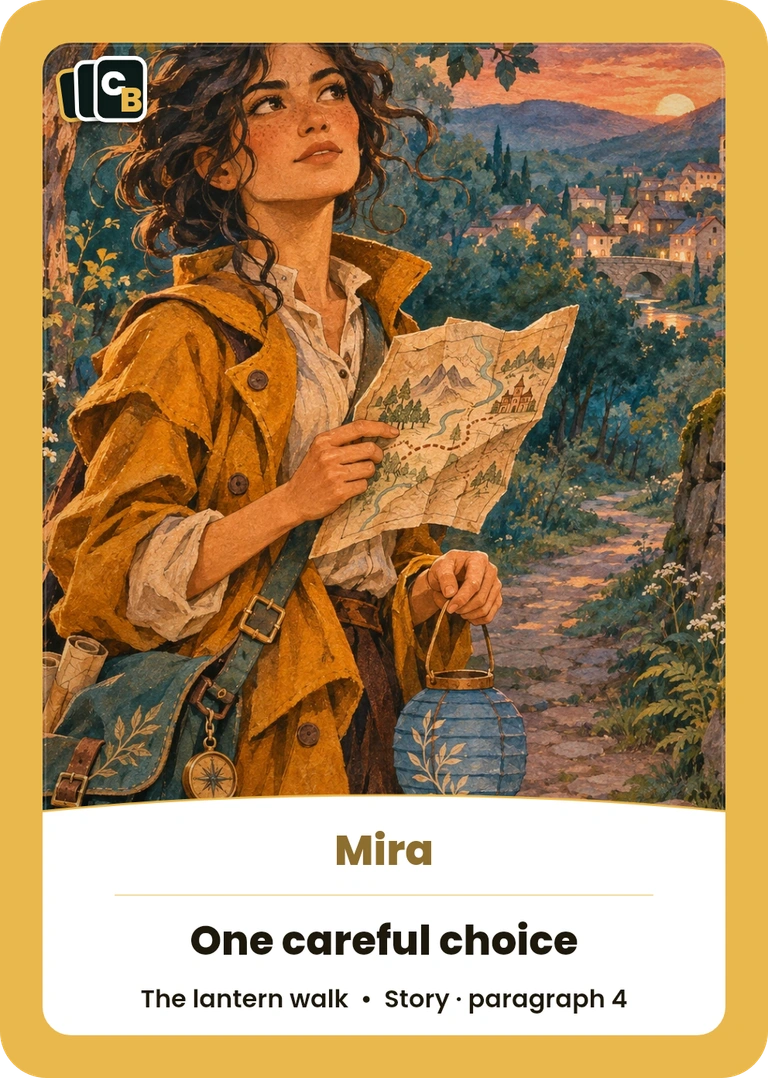
front
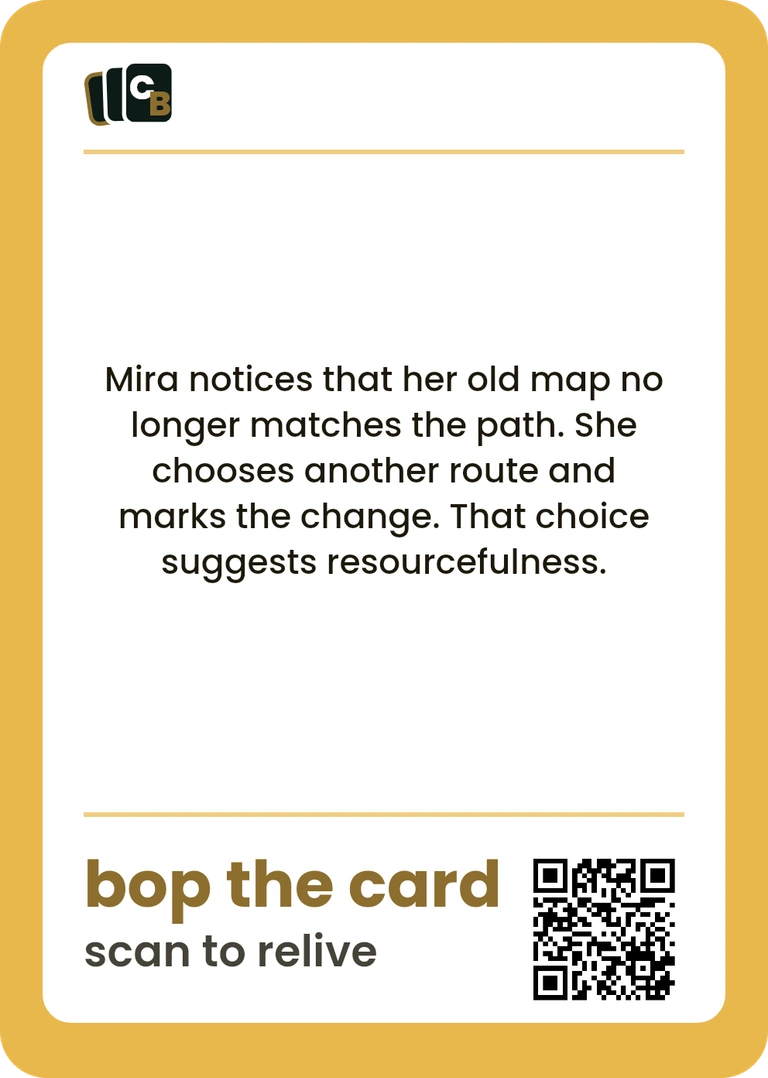
back
This is a complete paper project: use the original story and free worksheet without buying anything. A permitted drawing and your own summary can also become an optional printed keepsake in the Original style.
Free to design · No account needed to start · Preview before ordering.
Read first, then choose what the card can honestly say
This project is about reading a character from evidence. It differs from inventing an original character: here, your description has to fit what a text gives you. Start on paper, and keep the passage reference even if the final card has only a short summary.
The activity, story and review criteria are original Cardbop teaching material. They are not classroom-tested lesson results or a standards-certified curriculum. Adjust the reading, materials and support for your learners.
Free printable planning resource. Open it in your browser, then print or save a local copy. No account, upload or email needed. This is a worksheet, not a card print file, import tool or submission form.
Open the original story as a printable reading sheet. The story and project sheets may be printed for personal or classroom use.
An original story: The Blue Lantern Walk
Fiction · Original Cardbop story. The paragraph numbers below are part of the evidence system for this project.
1.Mira had drawn the village paths at the end of summer. On the evening of the lantern walk, she folded the map into her teal satchel and met Ivo beside the square. Pip, a fox who liked to carry the paper stars, waited near the baskets. They had promised to bring the blue lanterns to the meeting hall before the sky grew dark.
2.The shortest path crossed a little timber bridge. Ivo knelt before the first board and looked at a rope that had frayed against a post. “Wait here,” he said. Nobody stepped onto the bridge. Mira checked her map. The line across the brook looked perfectly straight, but the rope in front of them did not look safe.
3.They went back to the wide path. A gust lifted one of Pip’s paper stars from the basket and sent it into the low bushes. Pip watched where it landed. He wanted to follow at once, but Ivo asked the group to stay together while they chose a route. Pip marked the place with a fallen leaf so he could find it again.
4.Mira turned her map toward the last of the light. The hillside road was longer, but it reached the same hall without crossing the brook. She drew a new line in the margin and asked Ivo to check it with her. Then she moved the lanterns into two smaller baskets so each person could carry them comfortably.
5.Before they left, Pip returned to the marked spot with the others. He looked under the lowest branches and found the star beside the path. One corner was bent. He smoothed it gently and put it at the top of the basket. “We can still use this one,” he said. The group took the hillside road together.
6.They reached the hall after the first guests had arrived. Mira explained why they had changed the route, and Ivo offered to tell the next group about the bridge. Pip hung the bent star beside the door. In the lantern light, its folded corner was easy to see. The walk had not gone exactly as planned, but each of them had helped bring something to the hall.
Connect the claim, the evidence and the explanation
| Character and claim | Evidence | What it supports |
|---|---|---|
| Mira Resourceful in this situation | Paragraph 4: She finds a route that avoids the bridge, marks the map and divides the lanterns between smaller baskets. | A reading of this choice or moment, with room for another supported interpretation. |
| Ivo Observant before acting | Paragraph 2: He notices the frayed rope and asks the group to wait before anyone steps onto the bridge. | A reading of this choice or moment, with room for another supported interpretation. |
| Pip Persistent in this moment | Paragraph 5: He returns to the marked place, looks carefully and brings back the bent star. | A reading of this choice or moment, with room for another supported interpretation. |
These are interpretations, not a list of the only acceptable answers. Ask whether a different description can be supported, or whether a claim needs to become smaller and more precise.
Two more finished character cards
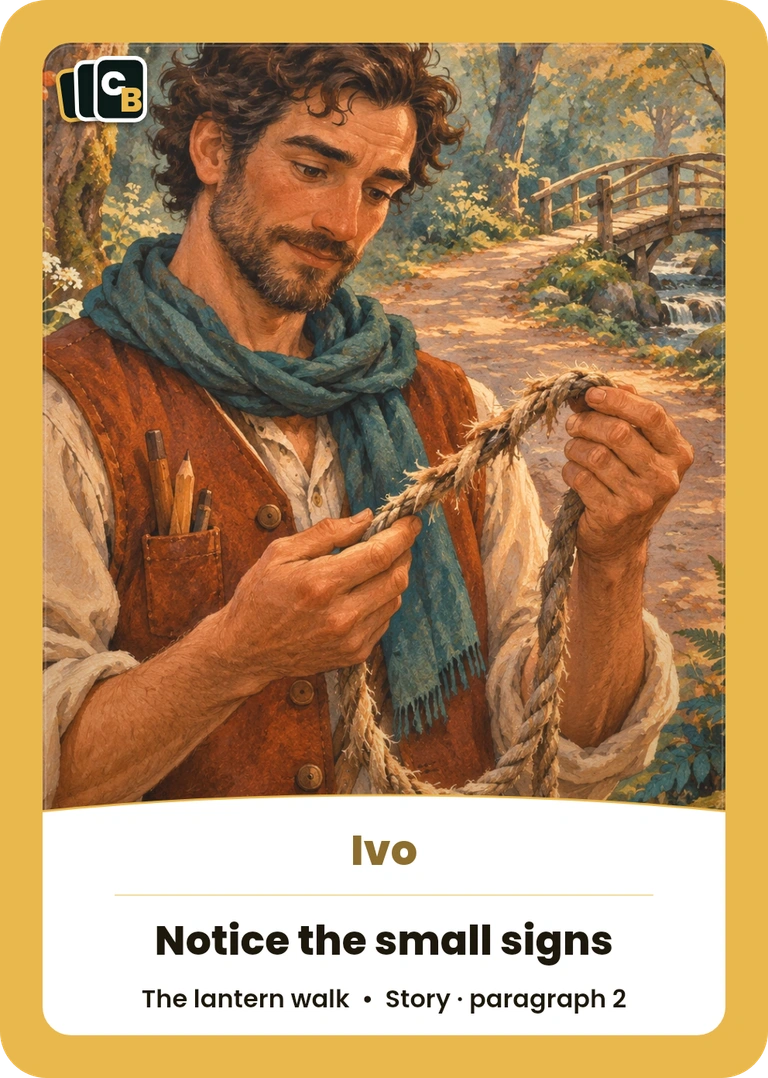
front
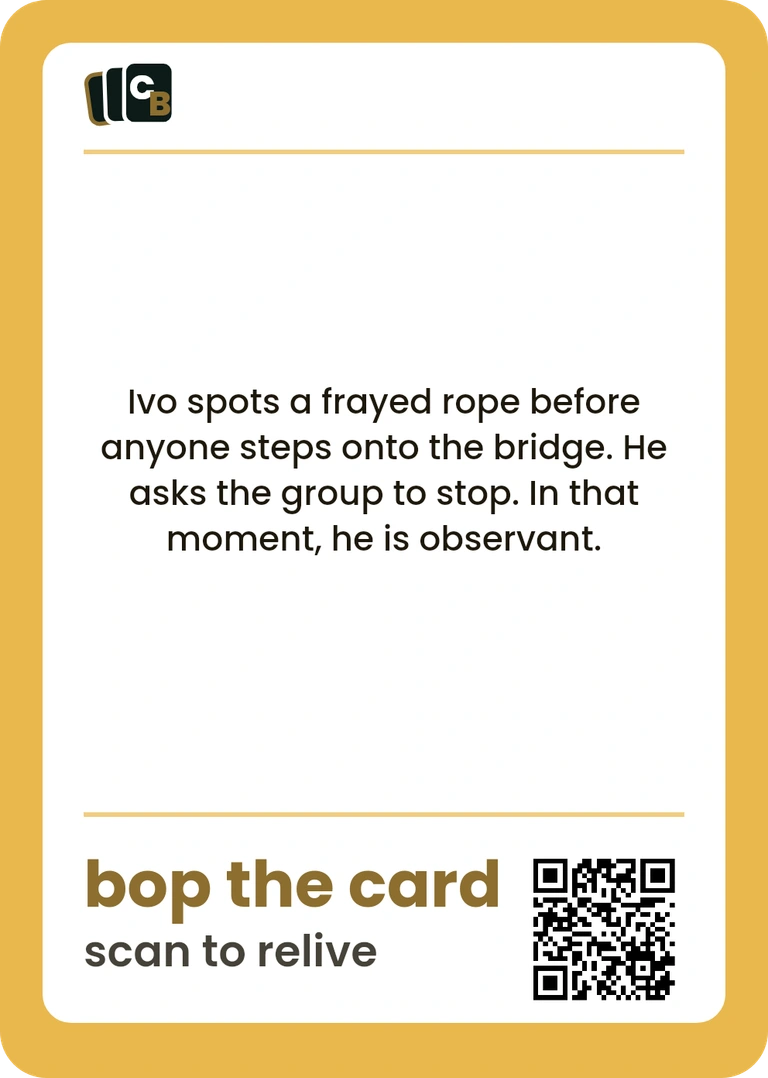
back
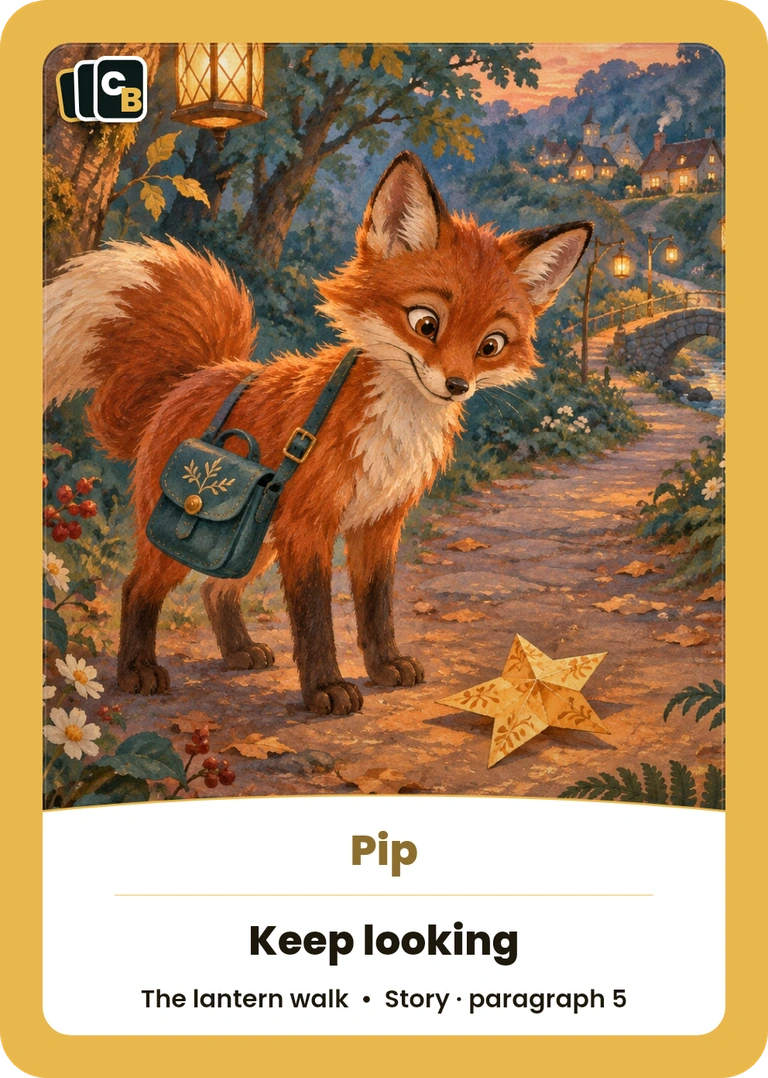
front
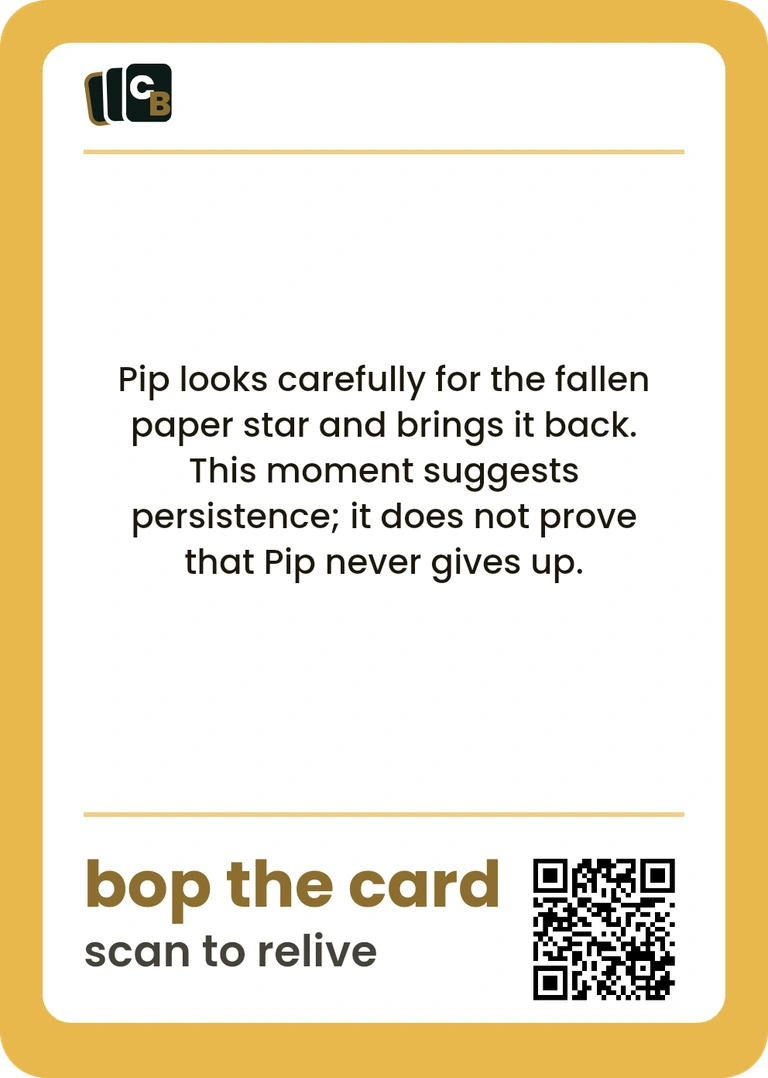
back
Correct a claim that goes farther than the text
Too broad
“Pip always finishes every task.”
The story gives one search for a paper star. It does not describe every task in Pip’s life.
Supported and limited
“Pip is persistent in paragraph 5: he returns, looks carefully and finds the star.”
The claim stays close to an action the reader can find.
A confident-looking illustration cannot prove a trait either. Separate what you can see in the picture from what the text says, and label imagination when you add something of your own.
Use the available fields without inventing a game
| Field | Printed wording |
|---|---|
| Card title | Mira |
| Who / subject | One careful choice |
| When | The lantern walk |
| Where | Story · paragraph 4 |
| Back message | Mira notices that her old map no longer matches the path. She chooses another route and marks the change. That choice suggests resourcefulness. |
The Original example uses a title, subject, story context and short back message. Optional fields can stay blank. Keep the source passage and fuller explanation on the worksheet if they do not belong on the printed card. A separate game, scoring system or official character license is not part of this project.
A simple review before you explain the card
- Claim: does the description stay within what this part of the story can show?
- Evidence: can another reader find the passage or action you used?
- Explanation: do you explain how the evidence supports the description?
- Presentation: are the words readable and the image original or permitted?
The printable sheet offers room to mark “ready to discuss,” “needs a clearer link” or “still a guess” for each criterion. Those are project review prompts, not a standardized assessment.
An established activity, an original project
ReadWriteThink’s Trading Card Creator provides an educational precedent for cards about people, characters and other subjects. Its trading-card evaluation resource includes the use of evidence from texts. The story, cards, worksheet and review wording here are our own; no endorsement or curriculum certification is implied.
Read it. Explain it. Make it yours.
A drawing and one supported idea are enough to try a design. The paper version remains a complete project, whether or not you choose a printed keepsake.
Free to design · No account needed to start · Preview before ordering.
Frequently asked questions
How do you make a character trading card for a book project?+
Read the text, choose a character and make one limited claim about them. Identify a passage or action that supports the claim, then explain the connection in your own words. Add a drawing or permitted image and review whether the card says more than the evidence allows.
What belongs on a book-character card?+
A name, the story or scene, one supported trait and a short explanation are enough. Keep the source passage or paragraph reference with the project. You do not need game powers, invented statistics or a complete biography.
Is the story on this page original?+
Yes. The Blue Lantern Walk, Mira, Ivo and Pip are fictional teaching material created for this Cardbop project. The character images are AI-generated illustrations. They are not student submissions or characters from an existing licensed series.
Can this project be completed on paper?+
Yes. Read or print the original story, use the free evidence sheet and draw a card. That is a complete project without a Cardbop account or purchase. Teachers can adapt the amount of reading and writing for their learners.
Is there only one correct character trait?+
No. Another interpretation can work if the reader points to relevant evidence and explains it. Keep the claim proportional to the passage: one patient action does not prove that a character is always patient.
Can I order a printed version of my project?+
A permitted image and your own supported wording can be tried in Cardbop’s Original style. The worksheet is a planning aid, not an import or print-ready card file. $29.95 for one Display Card and $49.95 for a 10-card Card Pack. Designing and previewing are free. Product prices are before applicable tax and shipping. Standard US Ground Shipping is $7.99 per order unless an eligible offer changes it. Review the total and any accepted code before payment.