Collector basics
What does /99 mean on a trading card?
Read serial numbers at a glance, understand common edition sizes, and keep numbering separate from grading and card-set numbers.
Last reviewed 2026-09-15
The short answer
A trading card numbered /99 belongs to a stated edition of 99 copies. A mark such as 17/99 means that card is copy 17 in the edition. Smaller edition sizes such as /25 or /10 indicate fewer stated copies, while 1/1 identifies a single-copy edition. Numbering is separate from a card's condition grade.
Read it left to right
How does serial numbering work?
The first number identifies that copy. The second number states the edition size. The slash separates the two: copy / edition.
- 17/99
- Copy 17 from an edition capped at 99 copies
- 3/25
- Copy 3 from an edition capped at 25 copies
- 8/10
- Copy 8 from an edition capped at 10 copies
- 1/1
- A single-copy edition
Serial number, card number, or grade?
These numbers answer different questions. A card can carry more than one of them without the terms becoming interchangeable.
| Number type | What it tells you | Example |
|---|---|---|
| Serial or edition number | Identifies a card within a stated edition | 17/99, 3/25, 1/1 |
| Card number | Locates a card in a checklist or set | Card 125 |
| Grade | Reports a third-party assessment of condition | A numeric condition grade |
A smaller edition can be scarcer within a manufacturer's set, but numbering alone does not establish condition, authenticity, or resale value. See the slab-versus-case guide for the separate grading distinction.
What does 1/1 mean?
A 1/1 is a single-copy edition. In a hobby release, the manufacturer controls that print run. A personal custom card uses the same notation differently: it can mark the keepsake as unique to its subject without proving manufacturer-controlled scarcity or market value.
Read the fuller explanation in what a one-of-one card means.
Can a custom card use an edition number?
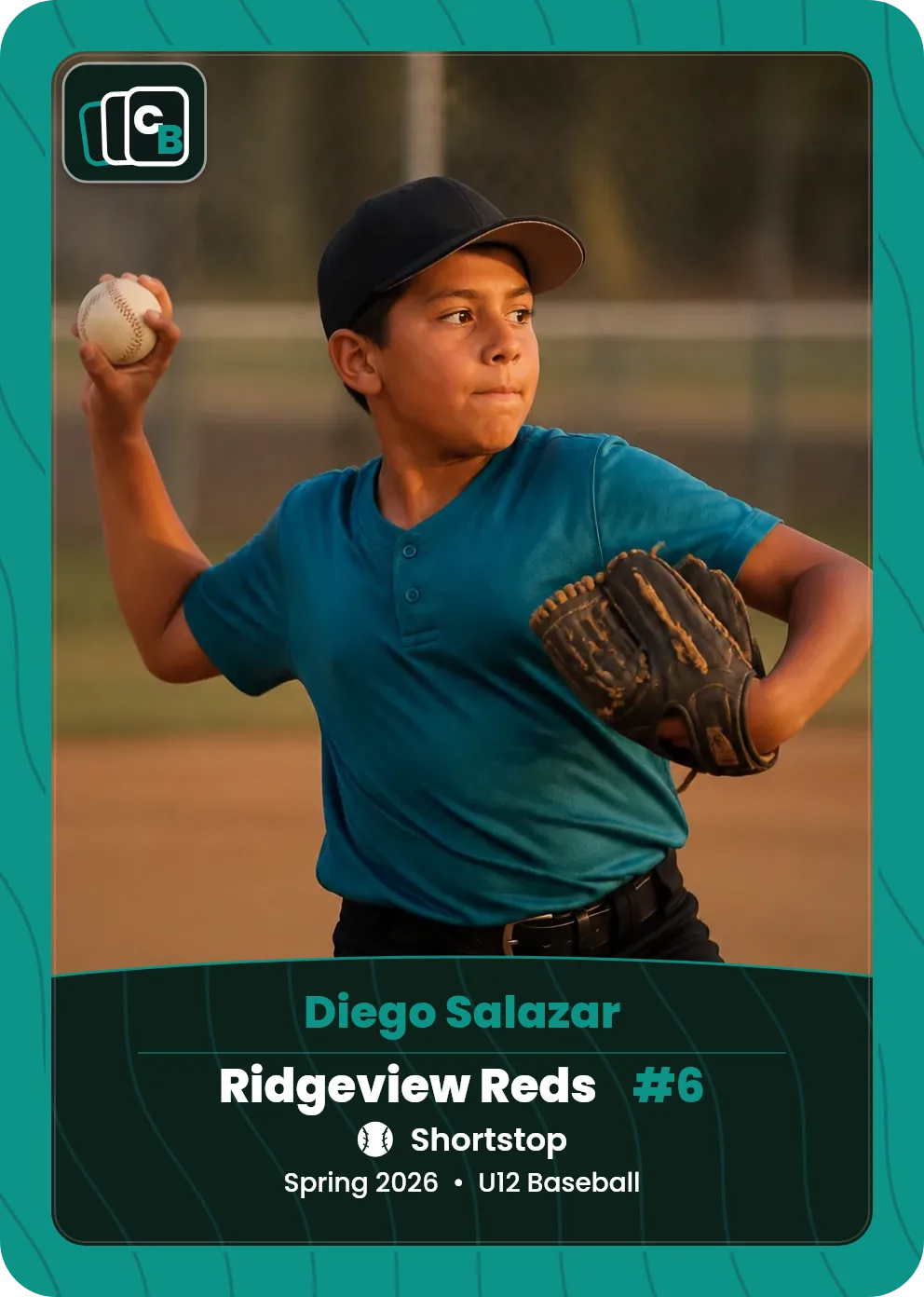
Yes. Add an optional serial or edition number, including 1/1, when it fits the card. On Cardbop the field is customer-entered and does not authenticate scarcity, condition, or value. Leave it blank when an edition number does not add anything to the story.
Serial or edition numbering is optional
1/1 is customer-entered on Cardbop
Numbering is not a condition grade
No authenticated scarcity claim
Free to design
Display Card $20
Frequently asked questions
What does /99 mean on a trading card?+
It means the card belongs to a stated edition of 99 copies. If it reads 17/99, it is copy 17 within that 99-card edition.
Is a lower serial number more valuable?+
Not automatically. The player or subject, set, condition, demand, and whether the numbering is manufacturer-controlled all matter. The number alone does not establish value.
What does 1/1 mean?+
A 1/1 is a single-copy edition. In the hobby, the manufacturer controls that run. On Cardbop, 1/1 is an optional customer-entered edition label for a personal keepsake, not authenticated scarcity.
Is a serial number the same as a card grade?+
No. A serial number identifies a card within an edition. A grade is a separate assessment of condition by a grading service. One does not prove the other.
Can I add /99 or 1/1 to a Cardbop card?+
Yes. The serial or edition field is optional and customer-entered. You may use 1/1 or another edition number when it fits your card, but Cardbop does not authenticate scarcity or assign a condition grade.
How much does a custom card cost?+
The current promotional price is $20 for one Display Card and $35 for a 10-card Card Pack. Regular prices are $25 and $50. Designing is free, and you can personalize one in minutes.