Guide · Card size & print specs
Trading card size and print specs
The standard is 2.5 × 3.5 inches. Below: the exact trim, bleed and safe-area measurements in inches, millimetres and pixels — plus what fits a sleeve.
The short answer
The standard trading card size is 2.5 × 3.5 inches (63.5 × 88.9 mm), portrait. For printing, build artwork at 2.75 × 3.75 in to allow 0.125 in of bleed on every side, keep text inside a 2.25 × 3.25 in safe area, and work at 300 DPI — 825 × 1125 pixels with bleed. Standard-size cards fit penny sleeves, toploaders, and 9-pocket binder pages.
What size should trading card artwork be?
Three measurements matter, and they are not the same number. The card is cut at the trim size, artwork must extend past it to the bleed size, and anything you need people to read has to stay inside the safe area.
| Measurement | Inches | Millimetres | Pixels @ 300 DPI |
|---|---|---|---|
| Bleed sizeArtwork extends to here | 2.75 × 3.75 in | 69.85 × 95.25 mm | 825 × 1125 px |
| Trim sizeWhere the card is cut — the finished size | 2.5 × 3.5 in | 63.5 × 88.9 mm | 750 × 1050 px |
| Safe areaKeep text and faces inside this | 2.25 × 3.25 in | 57.15 × 82.55 mm | 675 × 975 px |
Bleed is 0.125 in per side; the safe-area inset is the same again. These are the general print conventions for standard cards — a specific printer may ask for slightly different margins, so check before sending a file.
Quick reference
What is the trading card aspect ratio?
A standard 2.5 × 3.5 inch trading card has a 5:7 aspect ratio in portrait orientation. Landscape cards use the same physical dimensions turned sideways, so their ratio is 7:5.
Download the SVG reference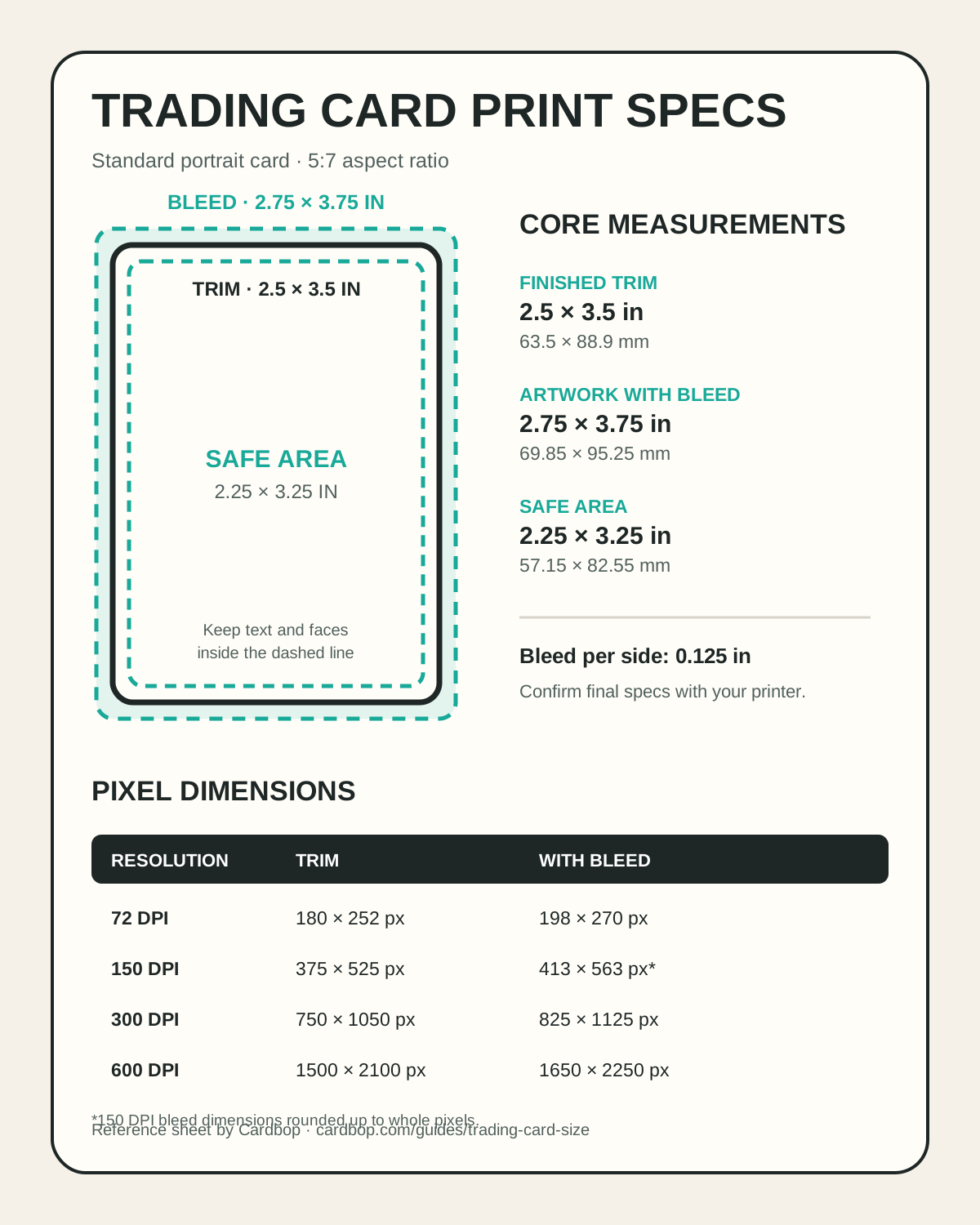
A scalable size, bleed, safe-area, and pixel-dimension sheet—not a Cardbop layout template.
| Resolution | Trim: 2.5 × 3.5 in | With bleed: 2.75 × 3.75 in | Use |
|---|---|---|---|
| 72 DPI | 180 × 252 px | 198 × 270 px | Screen mockups only |
| 150 DPI | 375 × 525 px | 413 × 563 px | Draft print; bleed values rounded up |
| 300 DPI | 750 × 1050 px | 825 × 1125 px | Recommended print file |
| 600 DPI | 1500 × 2100 px | 1650 × 2250 px | High-resolution line art |
What is bleed, and why does a card need it?
Cutting has a tolerance of a fraction of a millimetre. If artwork stops exactly at the trim line, a slight shift in the cut leaves a thin white sliver along one edge. Extending the background 0.125 in past the trim means the blade always lands inside the artwork, and the colour runs cleanly off the card.
What resolution should the artwork be?
300 DPI at final size — 750 × 1050 px for the trim, 825 × 1125 px with bleed. Below about 200 DPI, print looks soft. Upscaling a small photo does not add detail, so start from the largest original you have. Our photo tips guide covers what makes a phone photo print well.
What other trading card sizes are there?
Standard is the one everything else is built around. The rest turn up in specific sets and generally need their own holders.
| Name | Inches | Millimetres | Where you see it |
|---|---|---|---|
| Standard | 2.5 × 3.5 in | 63.5 × 88.9 mm | Sports cards, Pokémon, Magic, poker playing cards |
| Bridge | 2.25 × 3.5 in | 57 × 88.9 mm | Bridge decks — narrower, same height |
| Tallboy | 2.5 × 4.75 in | 63.5 × 120.7 mm | Late-1960s basketball; needs its own sleeves |
| Mini | 1.625 × 2.75 in | 41 × 70 mm | Allen & Ginter-style insert minis |
| Box topper / jumbo | 5 × 7 in | 127 × 178 mm | Oversized promo and box-topper cards |
Do standard cards fit sleeves and toploaders?
Yes. Penny sleeves, rigid toploaders, one-touch magnetic holders and 9-pocket binder pages are all made for 2.5 × 3.5 in cards, which is exactly why the standard is worth sticking to. A card even slightly outside it will not seat properly. A Cardbop Display Card arrives already sealed in its own display case, so it needs no sleeve at all.
Skip the file prep — make a standard-size card in minutes.
Cardbop handles trim, bleed and resolution for you. Upload a photo, add the details, and preview a real custom trading card — free to design, from $20.
Frequently asked questions
What is the standard trading card size?+
2.5 × 3.5 inches, or about 63.5 × 88.9 mm, in portrait orientation. It is the same size as baseball, basketball, Pokémon and Magic cards, and the same as a poker playing card.
What size should I make my artwork for printing?+
Build the file at 2.75 × 3.75 in (825 × 1125 px at 300 DPI) so artwork bleeds past the cut, and keep text inside a 2.25 × 3.25 in safe area. The card is trimmed to 2.5 × 3.5 in.
What is bleed, and why does a card need it?+
Bleed is artwork extending past the trim line — normally 0.125 in on every side. Cutting has a small tolerance, so without bleed a slight shift leaves a thin white sliver along the edge. With bleed, the colour runs off the card.
What resolution should trading card artwork be?+
300 DPI at final size. That is 750 × 1050 px for the trim size and 825 × 1125 px including bleed. Lower resolution prints soft, and upscaling a small photo does not add detail.
Do standard cards fit penny sleeves and toploaders?+
Yes. Penny sleeves, toploaders, one-touch magnetic holders, and 9-pocket binder pages are all built around the 2.5 × 3.5 in standard. Non-standard sizes like tallboys need their own sleeves.
What size are baseball cards?+
Modern baseball cards are the standard 2.5 × 3.5 inches. Cards printed before roughly 1957 varied — many early Topps and Bowman issues were smaller or wider — which is why vintage cards often need different holders.
What size are Cardbop cards?+
Standard, 2.5 × 3.5 inches — so they fit the sleeves, toploaders, and binder pages you already own. A Display Card arrives sealed in its own display case.
How much does a custom card cost?+
The current promotional price is $20 for one Display Card and $35 for a 10-card Card Pack. Regular prices are $25 and $50. Designing is free, and you can personalize one in minutes.