Guide · Small art, clearly described
Artist trading cards, ACEOs, and printed art cards
Artist trading cards, or ATCs, are small works made for creative exchange. ACEOs—Art Cards, Editions and Originals—are commonly offered for sale. Both use the familiar 2.5 × 3.5 inch format. Either way, tell the recipient whether they are holding the original artwork or a printed reproduction.
Make a printed Cardbop keepsake from your own artwork and supported details. It is a reproduction, with its own purpose alongside the original.
Free to design · No account needed to start · Preview before ordering.
Compare the exchange, the object, and the description
Three separate choices are easy to mix together: how an art card is shared, how it was made, and how many copies exist. “ATC” describes an exchange tradition; “ACEO” is used for art cards available to buy. Neither replaces a description of the actual object. A watercolor painted directly on a card and a printed copy of that watercolor are different things.
| Term | Usual context | What to say as well |
|---|---|---|
| Artist trading card / ATC | Creative exchange or a swap | The medium, original or reproduction, and the swap’s expectations |
| ACEO | Small-format art offered for sale | What was made by hand, what was printed, and any declared edition |
| Original artwork | The work created in the stated medium, rather than its reproduction | The actual medium and maker; distinguish a digital source, a physical original and a print |
| Printed reproduction | A printed version of a source artwork or image | The source credit, printing description and any relevant copy information |
Strathmore’s artist-trading-card guide describes the small-format swap tradition and the ACEO distinction. The ACEO reference includes originals, print editions and photographs. Individual exchanges set their own requirements, so read the organizer’s instructions before making a batch.
Three ways to make the description clear
The following situations are original teaching examples. They illustrate wording choices, not real artists, sales or completed swaps.
- A handmade swap card. Jo paints a small leaf directly onto a card for an exchange. A useful back note is “Leaf study · Jo · watercolor on paper · November 2026 · original.” Before joining, Jo checks whether the group accepts that paper, thickness and theme. There is no need to invent an edition number.
- A disclosed printed ACEO edition. Riley offers prints of a digital bird illustration. The description says “printed reproduction of an original digital illustration,” not “hand-painted bird.” If Riley declares a run of twenty copies, Riley records which image/version the run covers and tracks those copies separately. The number is a statement by the maker, not third-party verification.
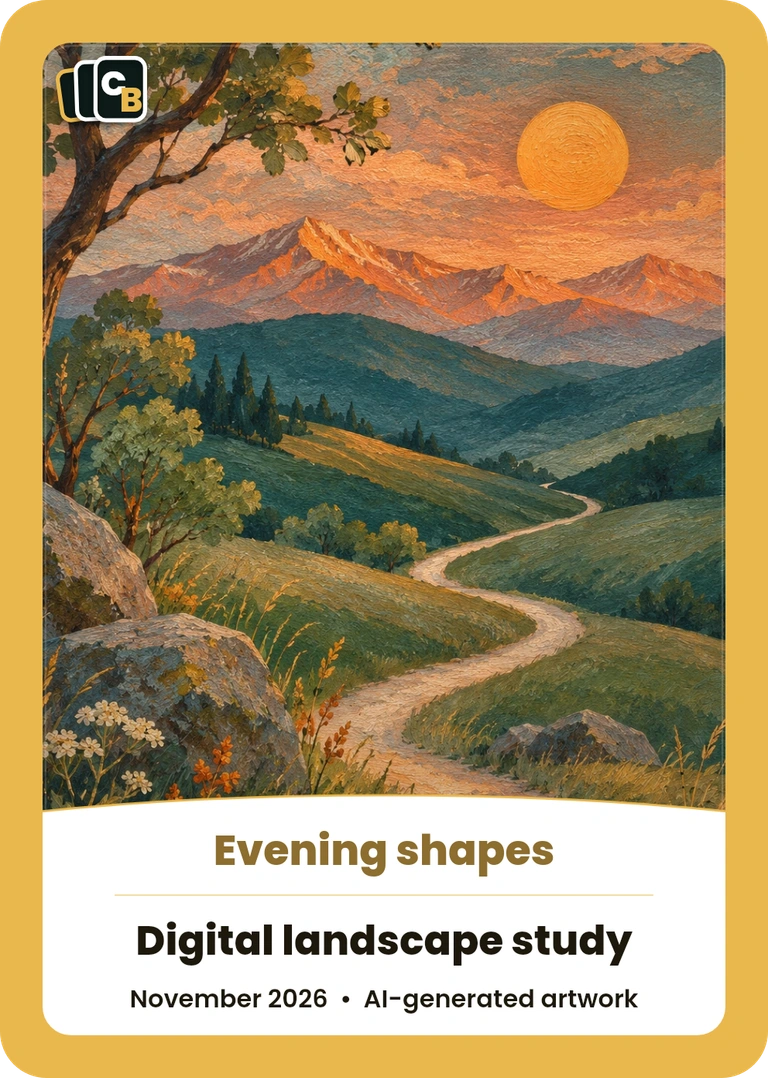
- A personal art keepsake. Someone chooses an AI-generated landscape for a friend. “Evening shapes · AI-generated digital artwork · printed reproduction” explains the object without calling it hand-painted or a scarce collectible. A short note can describe the image or explain why it was chosen for that recipient.
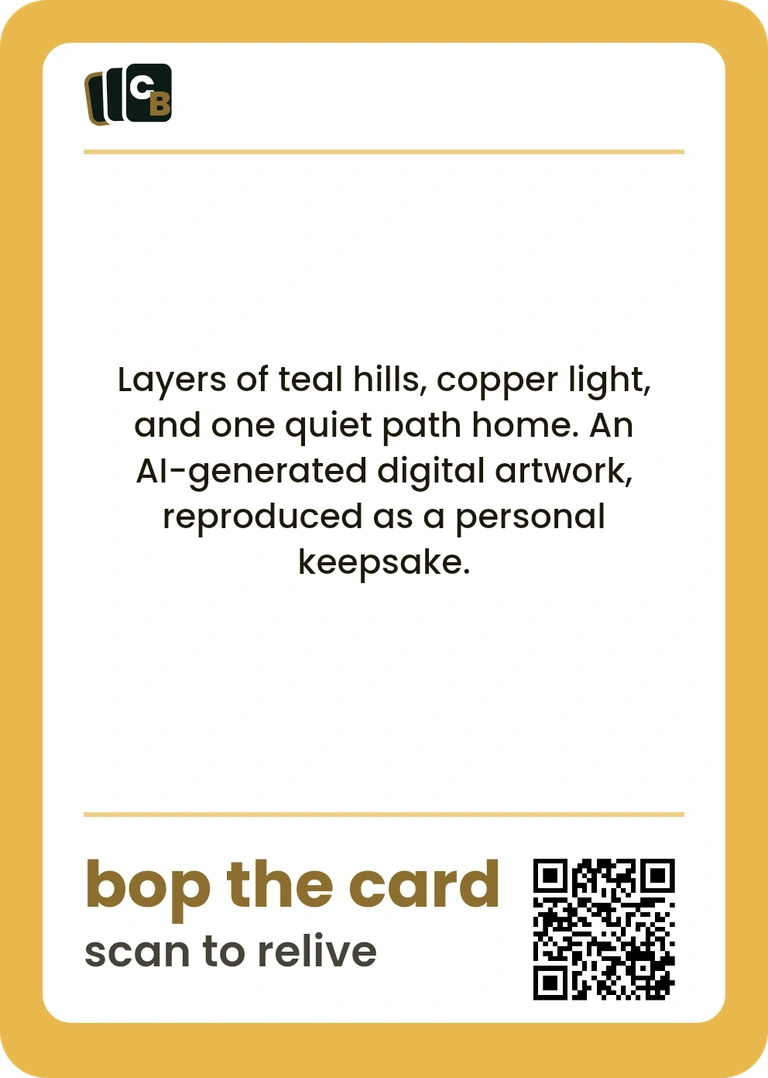
The finished example names the source plainly: “Digital landscape study” on the front, with “AI-generated artwork” as context. Its back describes the teal hills, copper light and quiet path home, and identifies the image as an AI-generated digital artwork reproduced as a personal keepsake.
Write the back before you choose a number
Start with a description another person can understand without asking you. The title identifies the work; the medium explains how the source was made; “original” or “reproduction” explains what changed hands. Include a date only when you know it. Avoid putting a home address, personal account or private commission details on the card by habit.
- Work: title or a short description.
- Credit: the creator’s chosen name and any agreed source credit.
- Object: actual medium; original artwork or printed reproduction.
- Copies: any declared edition scope, or leave this out when it does not apply.
- Context: one brief explanation of the subject or intended exchange.
Free printable planning sheet. Open it in your browser, then print or save a local copy. No email, upload or account needed. This worksheet is a planning aid, not a card print file or automatic import.
Keep permission and edition notes in your own records as well. An attractive number on the front or back does not establish that permission was obtained, that no other copies exist, or that the work has a particular value.
Give your own artwork a card of its own
Upload an image you are allowed to reproduce, then choose the supported details. In Original, the card title can identify the work, Who / subject can credit the maker, and the back message can describe the medium and reproduction context. These examples do not automatically fill your design.
For image preparation and the actual creation steps, follow turn your artwork into a trading card. A single Display Card includes its clear case for $29.95; a Pack contains 10 unslabbed cards for $49.95. Product prices are before applicable tax and shipping. Standard US Ground Shipping is $7.99 per order unless an eligible offer changes it. Review the total and any accepted code before payment.
Free to design · No account needed to start · Preview before ordering.
Check the artwork, then check the finished card
Keep a clean source file and work on a copy. Leave room around important edges, check the current crop, and review the back as carefully as the front. Text that works on a large screen may need editing at card scale. A digital preview checks content and placement; it is not a physical color or material proof.
For a swap, confirm acceptance before ordering printed copies. For a gift, choose the details that make sense to its recipient. For a sale, describe the delivered object plainly. In every case, a useful description gives the next person enough information to decide whether the card fits what they wanted.
Frequently asked questions
What is the difference between an artist trading card and an ACEO?+
Artist trading cards, or ATCs, belong to an art-exchange tradition. ACEO means Art Cards, Editions and Originals and is commonly used for art cards offered for sale. Both use the standard 2.5 by 3.5 inch format. Describe the actual medium and whether the object is an original or a reproduction; the acronym alone does not tell a recipient everything.
Does ACEO mean the card is a handmade original?+
No. An ACEO can be an original work or a print edition. A photograph or a reproduction can also be offered in the format. State what the recipient is getting, rather than relying on the name to imply hand-painted work or a particular production method.
Can I bring a printed reproduction to an ATC swap?+
Check the organizer’s rules before preparing copies. A swap may set its own expectations for handmade originals, reproductions, materials, thickness and themes. Tell the recipient how the card was made and do not present a printed copy as the physical original.
What should go on the back of an art card?+
Useful details include the creator’s chosen credit, the work’s title, date if known, medium and whether the card is an original or a reproduction. If you declare an edition, explain its scope and keep a separate record. Include only the contact or source details you intend to share.
Does numbering a printed card make it a limited edition?+
A printed number does not establish the size of an art edition, prove authenticity or prevent additional copies. If you describe a limited edition, define and document what it includes. Cardbop’s numbering is a design option, not an independent certification of an artist’s edition.
Can Cardbop turn my own artwork into a printed card?+
Yes. Start with an image you made or have permission to reproduce, then use the supported style fields and preview both sides. Cardbop prints a reproduction of the supplied image; it does not turn that reproduction into a handmade original or authenticate an edition. A Display Card in a clear case is $29.95; a 10-card Pack is $49.95. Product prices are before applicable tax and shipping. Standard US Ground Shipping is $7.99 per order unless an eligible offer changes it. Review the total and any accepted code before payment.