Guide · A name · A remembered moment
Keep one memory in words the family recognizes
Use the person’s preferred name and one specific memory, then check the wording with the people who will share it. Add dates only when they are known and wanted. A short, familiar detail can be enough; you do not have to summarize a life.
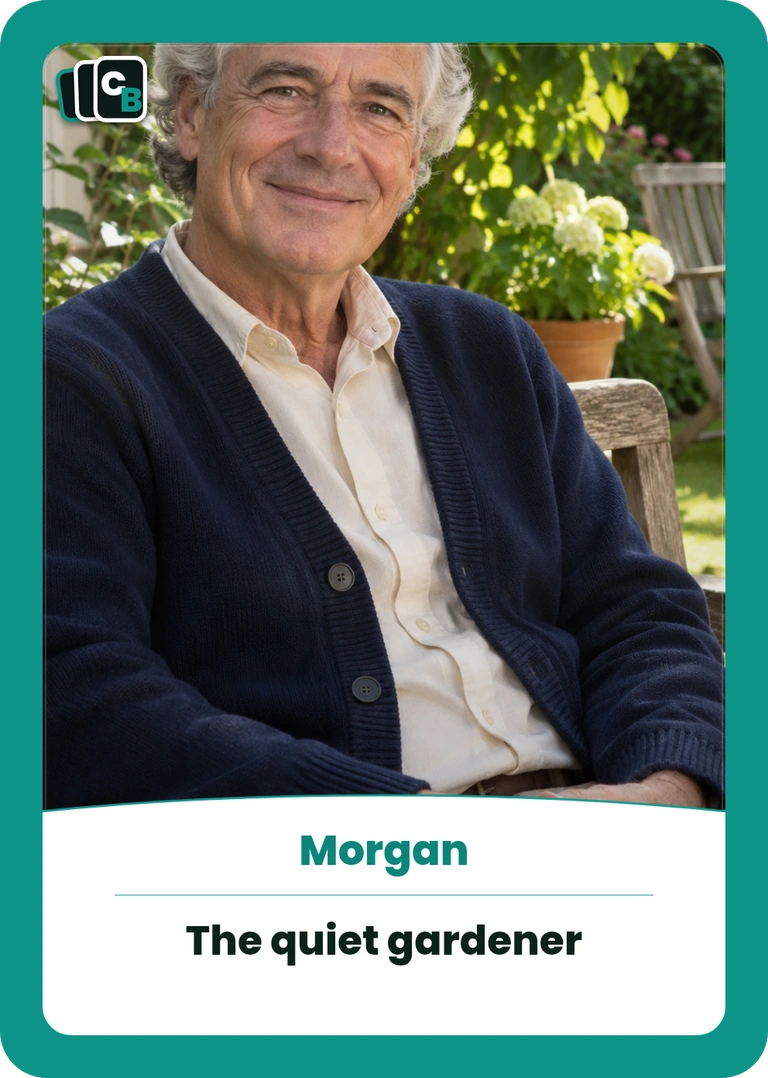
front
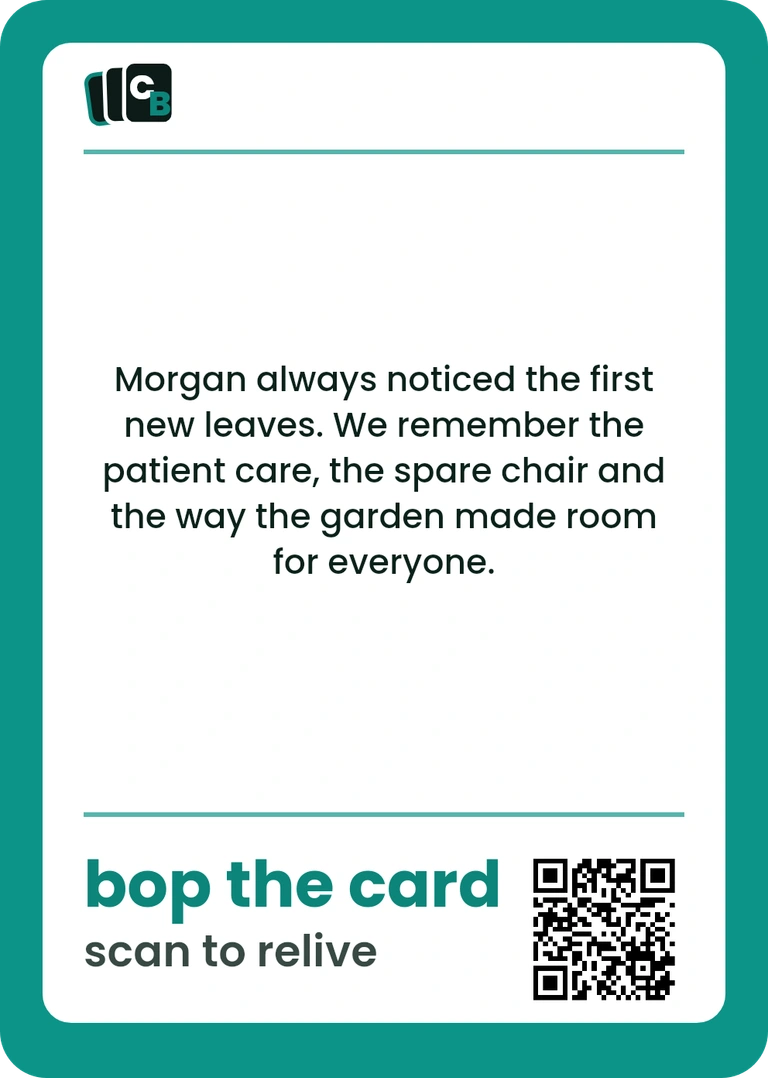
back
These ideas can become a handwritten note or a privately kept memory. If a printed card is useful to your family, review its wording and image together; keep the fuller story independently.
Free to design · No account needed to start · Preview before ordering.
Decide what kind of note you are making
A memorial keepsake is one possible way to hold a remembered moment. It is different from a sympathy message to someone who is grieving, a service program or a complete life history. A handwritten note or privately kept account can be the right outcome without ordering anything.
Choose the intended readers before choosing the wording. Ask what name, photograph and details feel appropriate to the family. You do not need to explain a death, describe private circumstances or make a statement about what every relative remembers.
Free printable planning resource. Open it in your browser, then print or save a local copy. No account, upload or email needed. This is a worksheet, not a card print file, import tool or submission form.
Eight original starting points for a remembered moment
Morgan is fictional, and all of these lines are original examples. Borrow the structure if it helps, then use a memory that belongs to your own relationship. None of the wording is a quotation from a real person.
1. An ordinary habit
“Morgan always noticed the first new leaves. We remember the patient care, the spare chair and the way the garden made room for everyone.”
Make it yours: Use a habit the family recognizes; this example describes a fictional person.
2. An invitation to stay
“We remember the ordinary afternoons: a warm cup, a familiar story, and Morgan asking us to stay a little longer.”
Make it yours: Replace the scene with one you knew rather than a borrowed description.
3. A shared place
“This is where we used to sit and let the afternoon take its time. I remember the company as clearly as the place.”
Make it yours: Name the place only if the family wants it shared.
4. A small kindness
“There was often an extra place and a question about how we were doing. Those are some of the things we remember.”
Make it yours: Choose an action rather than trying to prove someone was always one way.
5. A lesson kept
“I still pause to look closely before I begin. It is one of the small things I learned beside you.”
Make it yours: Use a lesson you actually associate with the person.
6. A familiar sound
“I remember the way a familiar story began and how everyone knew when to listen. That is part of what I want to keep.”
Make it yours: Do not put invented exact words in quotation marks.
7. An uncertain date
“I cannot place the year of this photograph. I can still remember who made the afternoon feel like home.”
Make it yours: Omit the date or label it unconfirmed in your source notes.
8. A family-approved line
“We remember the conversations, the welcome and the care given in ordinary ways.”
Make it yours: Ask the intended recipients whether this wording feels familiar and appropriate.
Let the short card and longer account have different jobs
A few familiar words can sit on the printed card. A longer letter or source note can keep the context, uncertainty and fuller account. These fictional pairs show what an edit can retain; they are not a claim about how someone should feel or what grief requires.
One familiar habit
A short printed note
“Morgan always noticed the first new leaves. We remember the patient care, the spare chair and the way the garden made room for everyone.”
A longer private note
“When I think about Morgan in the garden, I remember the attention given to small things: a new leaf, a chair moved into the shade, a question about someone else’s day. I do not need to fit every part of a life into this note. I want to keep this particular way of making room for people.”
An ordinary afternoon
A short printed note
“We remember the ordinary afternoons: a warm cup, a familiar story, and Morgan asking us to stay a little longer.”
A longer private note
“There was no special occasion in the afternoons I remember most clearly. We would sit for a while, hear a familiar story and find a reason not to hurry away. I have kept that ordinary scene because it still feels like time we shared, without needing it to stand for everything.”
A lesson
A short printed note
“I still pause to look closely before I begin. It is one of the small things I learned beside you.”
A longer private note
“I catch myself doing something small the way I learned it beside you: pausing, looking carefully and giving the work a little more time. I cannot name every day when that lesson happened. I can recognize the part of it I still carry, and that is what I want this short note to hold.”
When the year is unknown
A short printed note
“I cannot place the year of this photograph. I can still remember who made the afternoon feel like home.”
A longer private note
“We have not confirmed the year of this photograph, so we are leaving the date off the card. The family has checked the name and agreed on the remembered scene. Keeping that uncertainty visible feels more faithful than choosing a year just to fill the space. The fuller notes stay with the original photograph.”
A second finished wording choice
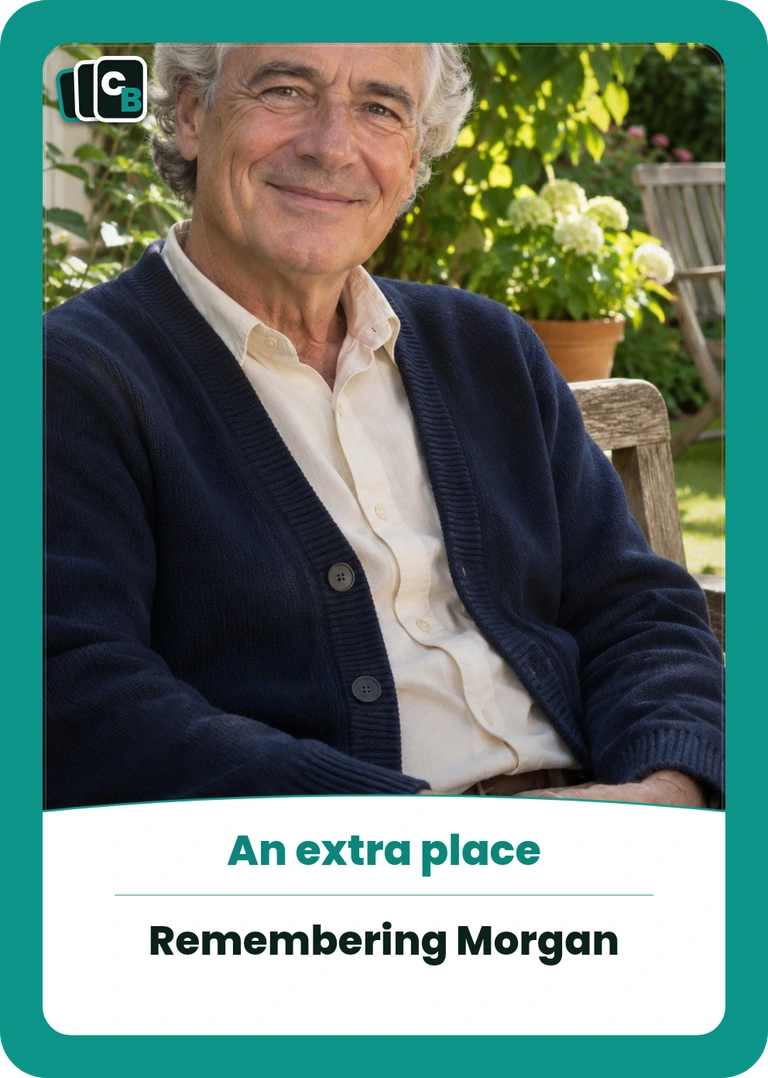
front
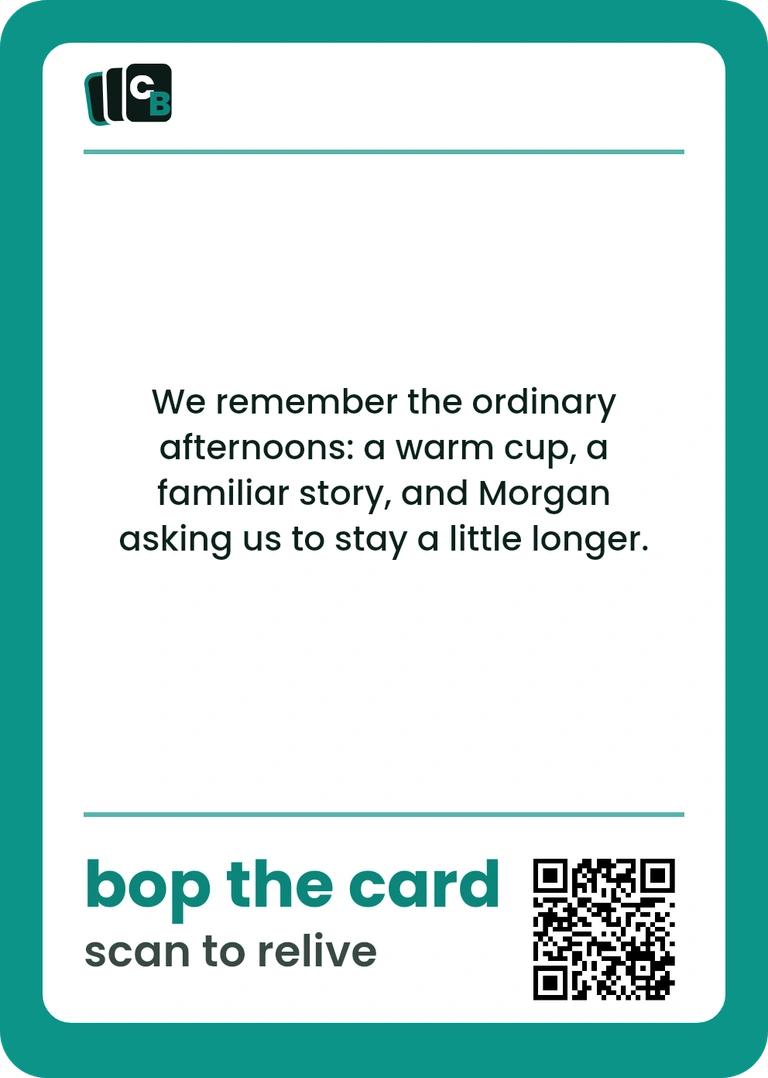
back
The two Morgan designs keep names and dates simple. Neither needs an invented birth year or a whole biography to make the memory understandable.
Check names, dates and quotations carefully
- Name: confirm the preferred spelling and how the person should be named for this audience.
- Dates: check them against a source the family trusts, or omit them. The wording sheet keeps a place for unresolved details.
- Exact words: distinguish a verified quotation from a remembered meaning. An attributed paraphrase can be more honest than quotation marks around a guess.
- Photo: use an image you may reproduce and check that the crop suits the intended readers.
- Sharing: review who will receive the card and what any linked page makes accessible.
Keep the source notes and original image independently. A printed card or a linked story page is not a promise of archival permanence. The old-photo preparation guide covers making a working copy without treating the keepsake as a replacement for the original.
Leave optional fields blank when that is more faithful
| Field | Printed wording |
|---|---|
| Card title | Morgan |
| Who / subject | The quiet gardener |
| When | Left blank |
| Where | Left blank |
| Back message | Morgan always noticed the first new leaves. We remember the patient care, the spare chair and the way the garden made room for everyone. |
The example uses a name, a short subject and a message in the supported Original fields. Its When and Where fields are blank. That is an intentional choice, not missing information the creator must fill for you.
If you choose a QR memorial keepsake, review the destination and intended audience before sharing it. Keep private notes out of a public story, and do not assume that a printed example represents an already saved customer page.
Review the words with the people who will keep them
Read the final version aloud and ask whether the family recognizes the voice and the remembered scene. Leave time for someone to ask for a change or choose not to receive the card. The sheet is a practical review aid, not a legal consent document.
For the related task of writing to a bereaved person, Hallmark’s sympathy-writing guide offers a card publisher’s perspective. This page’s keepsake wording, fictional scenes and review sheet are original Cardbop material; they do not provide clinical guidance or promise an emotional outcome.
Start with the memory you want to keep
If a printed keepsake is useful to your family, bring a permitted image and wording that the intended recipients have reviewed. Inspect the complete front and back before choosing an order.
Free to design · No account needed to start · Preview before ordering.
Frequently asked questions
What should I write on a memorial keepsake card?+
Use a checked name and one specific remembered detail, habit or shared place. Keep the wording familiar to the people who will receive it. A short memory is enough; the card does not need to summarize the person’s whole life.
Do I have to include birth and death dates?+
No. Include dates only when they are known, checked and wanted by the family. Leave the fields blank if a date is uncertain or does not belong in this keepsake. Keep unresolved information in the source notes rather than choosing a date to fill space.
Can I use a quote I remember them saying?+
Use quotation marks only when the wording is known accurately and the intended sharing is appropriate. If you remember the meaning but not the exact words, write an attributed paraphrase instead. Do not invent a quotation or attach an unattributed line to the person.
How is a memorial keepsake different from a sympathy card or funeral program?+
A keepsake can hold a photo and a particular memory for someone to retain. A sympathy message addresses a bereaved recipient, and a funeral program has its own service information and requirements. This guide does not provide an official program, counseling or archival-preservation service.
Are Morgan and these memories real?+
No. Morgan and the memories are entirely fictional writing examples. The portrait is AI-generated and the card faces are native digital renders. They are not a real deceased person, customer story or photographs of manufactured cards.
Can I use the wording sheet without ordering?+
Yes. The original examples and printable family-review sheet are free to read, adapt and print without an account or purchase. Physical cards are optional. $29.95 for one Display Card and $49.95 for a 10-card Card Pack. Designing and previewing are free. Product prices are before applicable tax and shipping. Standard US Ground Shipping is $7.99 per order unless an eligible offer changes it. Review the total and any accepted code before payment.