Guide · From the coach
A coach’s message, written for the player
Name one thing you noticed, explain what it meant to the team, and leave the player with a specific encouragement. A message from a coach to a player should sound different from a note thanking the coach.
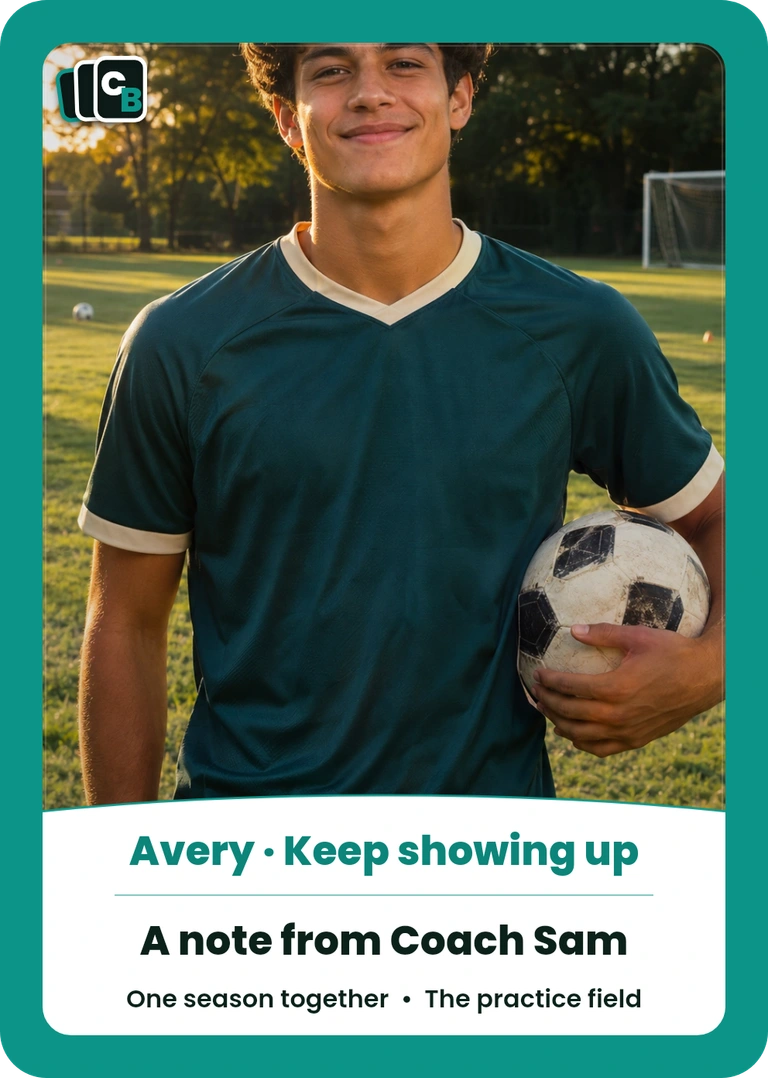
front
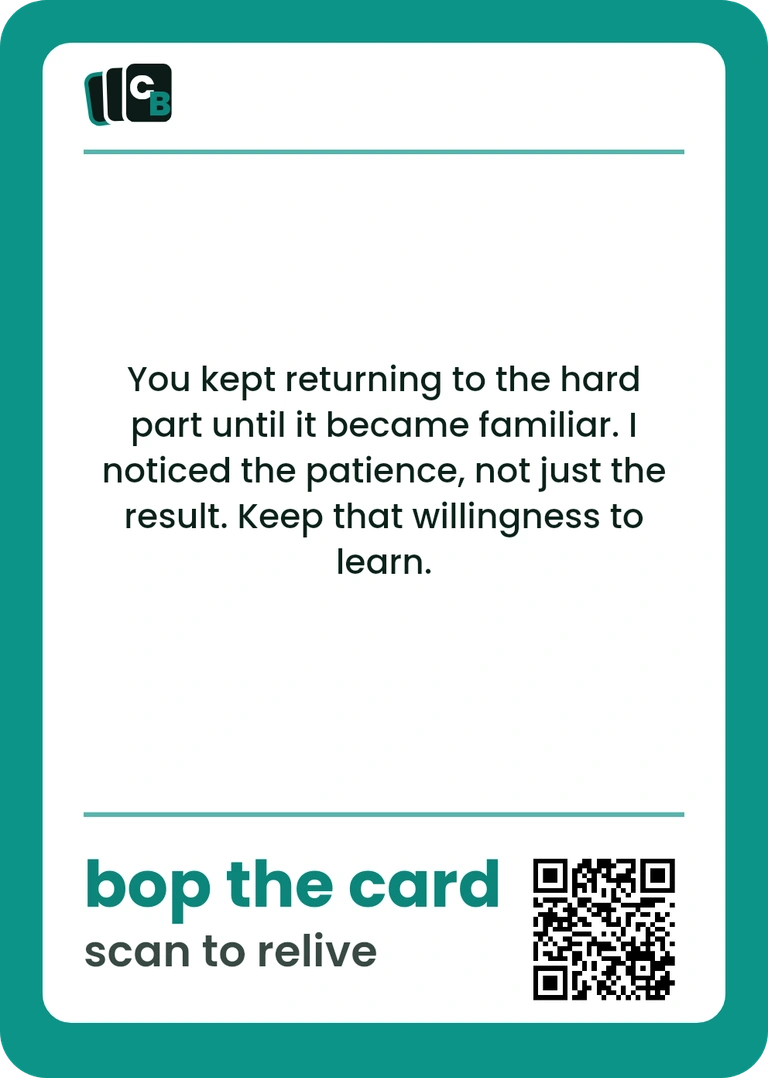
back
Use the examples and free sheet for a handwritten note or a team reflection. If you choose a printed keepsake, prepare your wording first and review both sides in the Original style.
Free to design · No account needed to start · Preview before ordering.
Choose the direction before the wording
A coach can thank a player for a contribution, recognize a change they witnessed or leave the whole team with a shared memory. That is different from thanking the coach for a season of work. If you are a player, parent or team organizer writing to the coach, the coach thank-you message guide has the relevant categories and contributor worksheet.
Before writing, finish this sentence privately: “I noticed you…” Then choose one example you can describe without guessing what someone felt. You can say a player returned to a difficult drill; you do not need to declare that they were never discouraged.
Free printable planning resource. Open it in your browser, then print or save a local copy. No account, upload or email needed. This is a worksheet, not a card print file, import tool or submission form.
Twelve original messages, with room for your own detail
These are original writing examples, not quotations from real coaches or reports about real players. Use the prompt beside each message to make the wording true for your recipient. Do not copy a specific claim simply because it sounds encouraging.
1. Improvement
“You kept returning to the hard part until it became familiar. I noticed the patience, not just the result. Keep that willingness to learn.”
Make it yours: Name the skill they kept working on; do not invent a result.
2. Reliability
“You were ready when someone needed a partner. Your steady presence made practice easier for the people beside you. Thank you for showing up for them.”
Make it yours: Remember one ordinary practice when their presence helped.
3. Inclusive leadership
“You made room for quieter voices and helped new players feel included. That is a kind of leadership worth carrying into your next team.”
Make it yours: Choose an action you personally saw, rather than assigning a personality label.
4. A first season
“You tried something unfamiliar and kept asking questions. I hope you remember how much there is to enjoy before everything feels easy.”
Make it yours: Use the player’s own description of what was new.
5. A changed role
“You learned a different role and stayed curious about how to help. Thank you for giving the team another way forward.”
Make it yours: Name the role only if the player wants it included.
6. Encouragement from the sideline
“You stayed involved when it was someone else’s turn. The way you encouraged your teammates mattered to this group.”
Make it yours: Avoid making a public message about playing time or a private disappointment.
7. After a difficult season
“Some days asked more of us than we expected. I noticed the way you returned, listened and found one thing to work on.”
Make it yours: Keep sensitive details out; mention only a shared, approved observation.
8. Learning from a mistake
“You paused, asked what you could change and tried again. That response is a part of this season I want you to remember.”
Make it yours: Do not identify an embarrassing incident unless the player chooses it.
9. Helping a new teammate
“You made the first practice easier for someone who did not know the routine. Thank you for noticing when a small welcome was needed.”
Make it yours: Describe the welcome without identifying another child’s private circumstances.
10. Looking toward next season
“Take the part of this season that made you curious and keep working with it. I look forward to seeing what you choose to learn next.”
Make it yours: Offer encouragement without promising selection, playing time or results.
11. The whole team
“Thank you for building a place where we could practice, ask questions and keep learning together. Each of you helped make this season ours.”
Make it yours: Add one moment that includes the group without claiming everyone had the same experience.
12. A player moving on
“I am glad our paths crossed for this season. Carry the habits that helped you learn, and leave room for the next team to surprise you.”
Make it yours: Use a forward-looking wish that fits their actual plans, or leave plans unspecified.
Keep the card short. Give the longer note its own space.
A printed card and a longer letter can do different jobs. The card can hold the observation you want someone to find again. A separate private note can explain the circumstances. The following pairs are fictional examples of that editing choice, not a promise about how much text every layout can hold.
Improvement
A short printed note
“You kept returning to the hard part until it became familiar. I noticed the patience, not just the result. Keep that willingness to learn.”
A longer private note
“I kept noticing the way you returned to the same small problem at practice. You asked a question, tried a different approach and stayed with it even when there was nothing to celebrate yet. I hope you carry that patience into whatever you choose next. The result is one part of the story; the way you learned is another.”
Reliability
A short printed note
“You were ready when someone needed a partner. Your steady presence made practice easier for the people beside you. Thank you for showing up for them.”
A longer private note
“A team is shaped by ordinary days as well as the last game. You were often the person ready to begin, willing to work with a different partner and able to make a routine task feel manageable. I wanted you to know I saw that. Thank you for the quiet contribution you made to our time together.”
Leadership
A short printed note
“You made room for quieter voices and helped new players feel included. That is a kind of leadership worth carrying into your next team.”
A longer private note
“When I think about your contribution, I remember the room you made for other people. You listened before answering and helped new players understand what was happening. Those actions did not need a title to matter. I hope your next group gives you the same welcome you helped offer here.”
The whole group
A short printed note
“Thank you for building a place where we could practice, ask questions and keep learning together. Each of you helped make this season ours.”
A longer private note
“This season belonged to more than one score or one memorable day. It was made of the practices we arrived for, the questions we asked and the ways we learned to work beside each other. Thank you for your part in that. I hope each of you leaves with one moment you are glad to keep.”
The same player, two other things a coach might notice
The three Avery designs deliberately use the same fictional player and image. Changing the observation changes the message; a new photograph is not what makes praise personal.
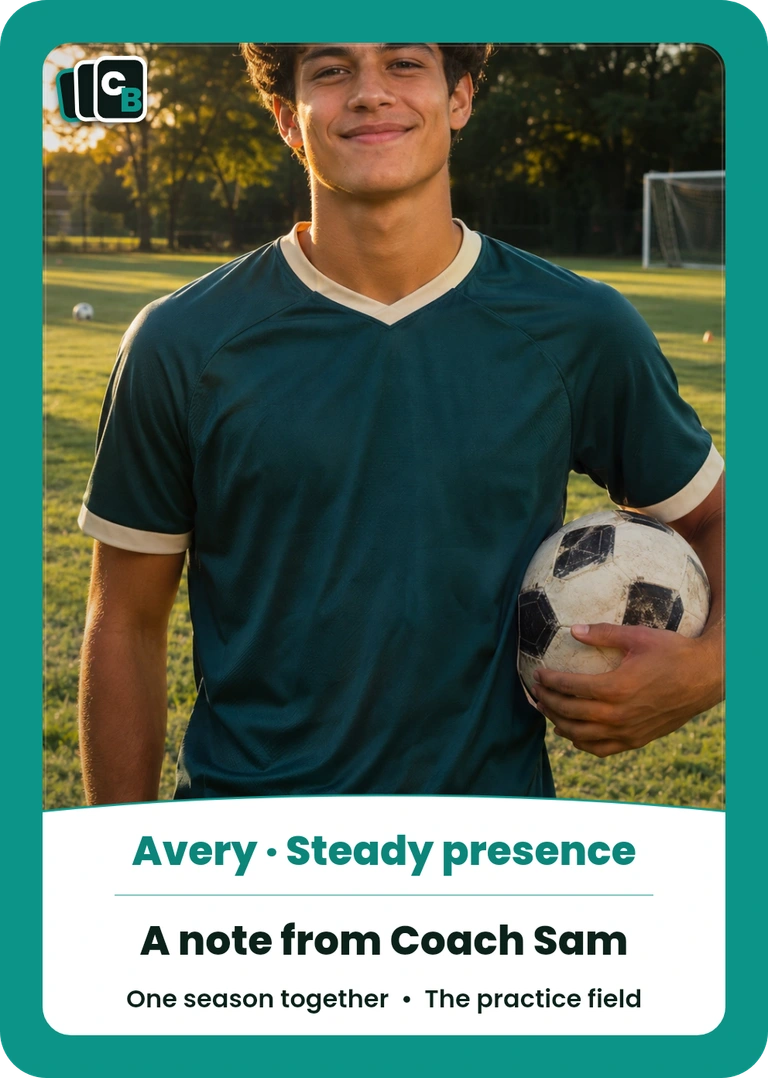
front
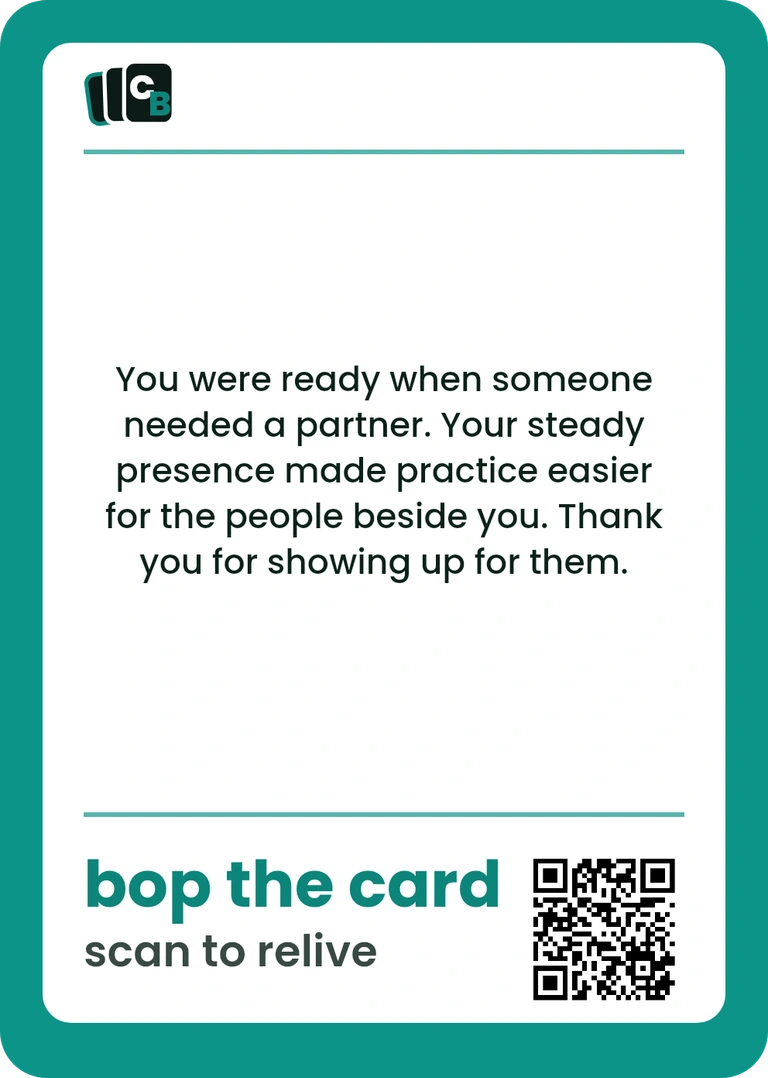
back
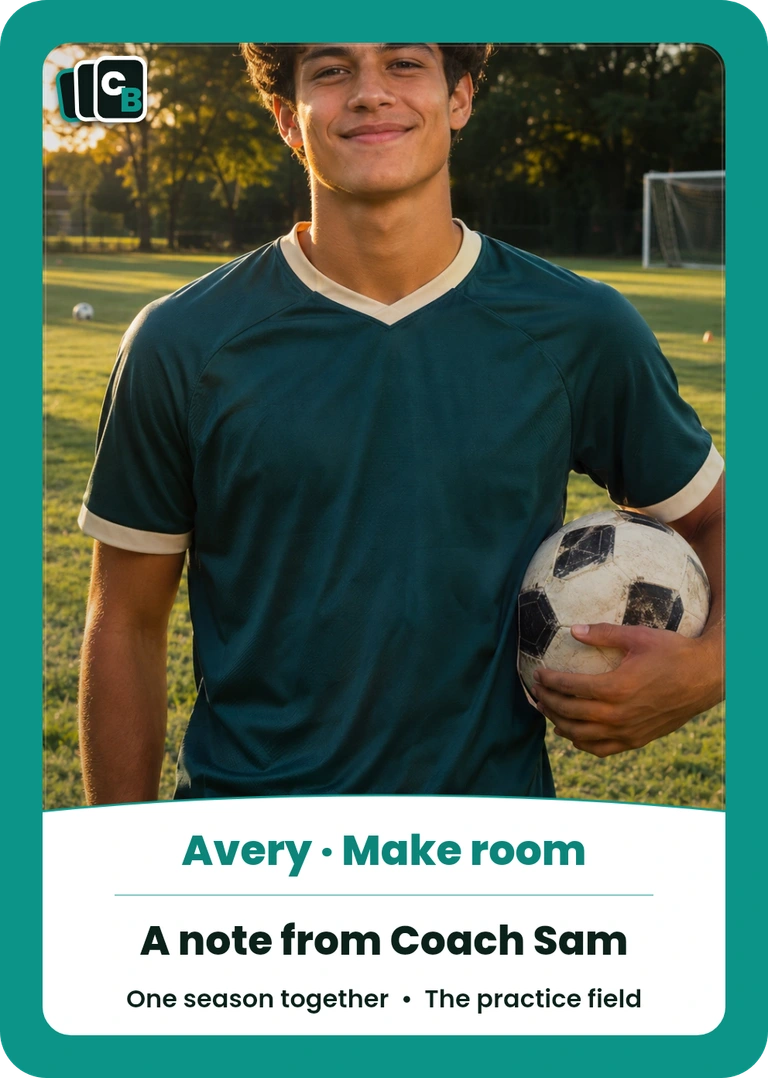
front
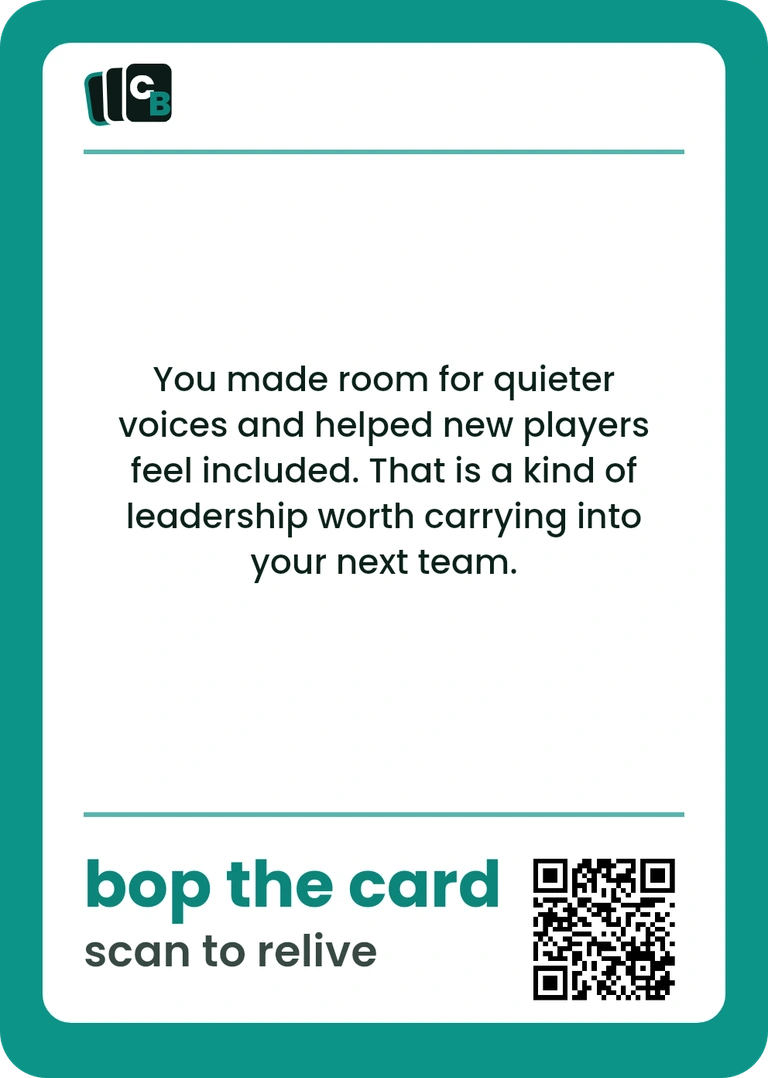
back
Map one observation to the available fields
| Field | Printed wording |
|---|---|
| Card title | Avery · Keep showing up |
| Who / subject | A note from Coach Sam |
| When | One season together |
| Where | The practice field |
| Back message | You kept returning to the hard part until it became familiar. I noticed the patience, not just the result. Keep that willingness to learn. |
The Original style has these supported fields; it does not add a separate field for a whole coaching report. Leave optional details blank when they do not help. Check the player’s name, your attribution and the complete front and back in the actual preview. The examples do not automatically fill the creator.
Plan a fair and practical handoff
For a group, decide whether you are making one card for each player or giving each recipient a complete set. Those are different quantities. A repeated design still uses a physical card slot. The team-order planner can help you prepare the roster, photos and review steps.
Ask which names and details are suitable for sharing. A public card should not reveal a private setback just to make a message feel specific. If the note is personal, choose a private handoff and keep the longer account independently. Check current production and transit information before planning an event; an example card is not a delivery commitment.
Start with the thing you actually noticed
Bring a photo you may reproduce and one approved message. Review the wording, crop and both sides before deciding whether to order.
Free to design · No account needed to start · Preview before ordering.
Frequently asked questions
What should a coach write to players at the end of a season?+
Name one action you noticed, explain why it mattered and offer a specific encouragement. Choose something true for that player rather than assigning the same praise to everyone. A short message can recognize learning, reliability or the way someone welcomed a teammate.
How long should a printed coach-to-player message be?+
Begin with one remembered moment and a few short sentences, then inspect the actual preview. There is no single word count that fits every style and text combination. Keep a longer account in a separate note rather than shrinking it until it is difficult to read.
Can I write one message for the whole team?+
Yes. Thank the group for a shared experience and acknowledge that each player contributed differently. If you make individual cards, personalize a detail for each recipient and count every physical copy you need.
What details should I leave out of a player’s message?+
Leave out private setbacks, medical details, unwanted nicknames and embarrassing incidents. Ask before attributing someone else’s words. Use the player’s preferred name and include only details that are appropriate for the intended recipients.
Is this the same as a thank-you message to a coach?+
No. This guide is written from a coach to players. A note thanking a coach has a different speaker and purpose; use the linked coach thank-you guide for messages from players, parents or the whole team.
Are the examples and worksheet free?+
Yes. Read, adapt and print the planning sheet without an account or purchase. Cardbop designing and previewing are also free. $29.95 for one Display Card and $49.95 for a 10-card Card Pack. Designing and previewing are free. Product prices are before applicable tax and shipping. Standard US Ground Shipping is $7.99 per order unless an eligible offer changes it. Review the total and any accepted code before payment.