Baseball projects
Turn a scorebook entry into a baseball card
Pick one verified entry from the scorebook, translate it into ordinary language, and add a line about what made the play memorable. Keep the full box score in your records. When a mark is unclear, ask the scorer or use an observed detail you can describe accurately.
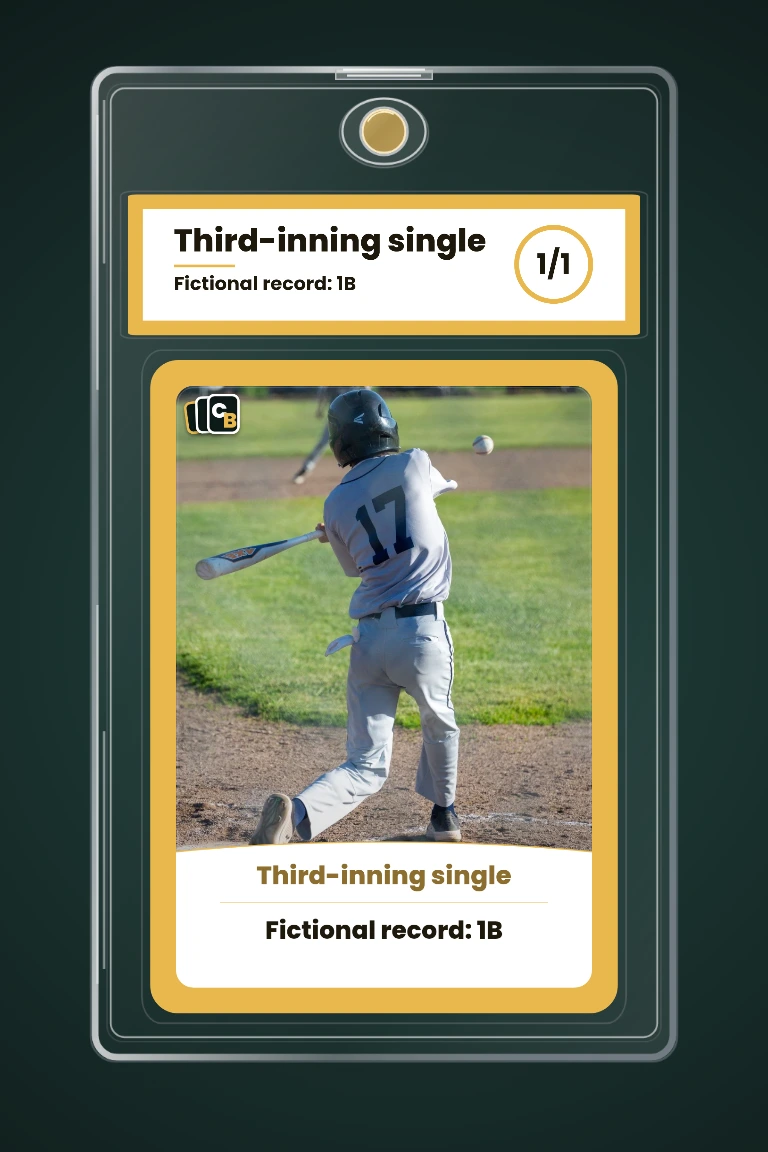
Cased Display Card
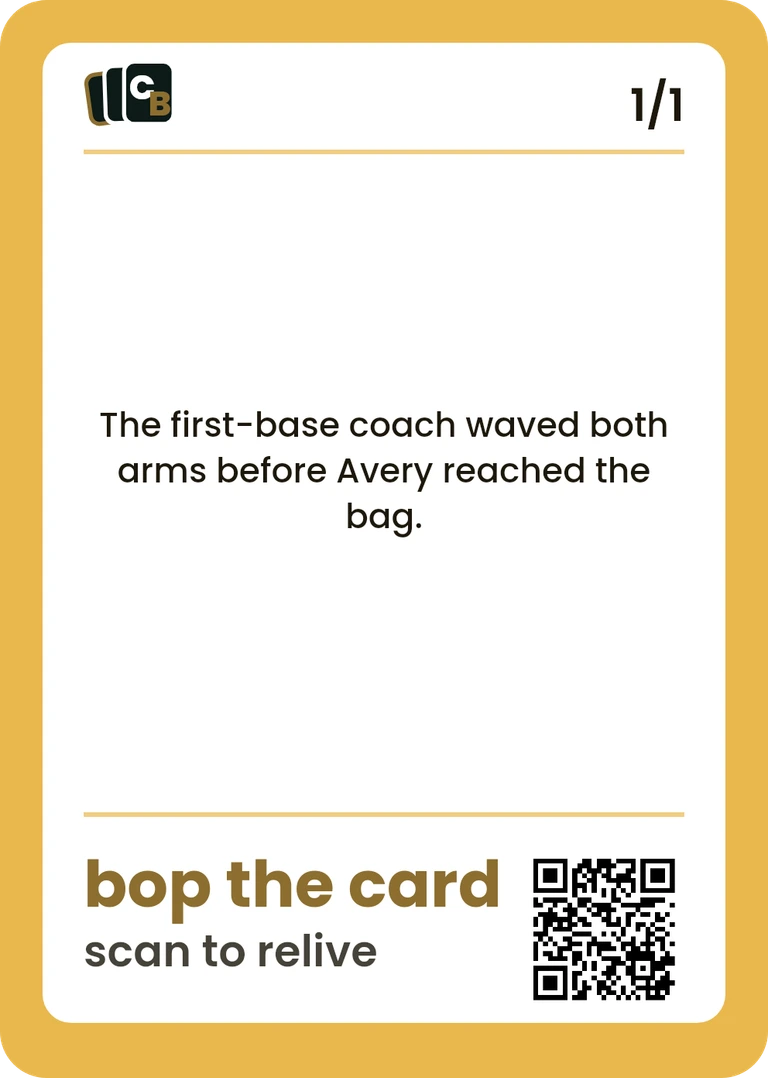
Sample card back
A Cardbop Display Card is one custom card sealed in a clear display case with a personalized label.
Free to design · No account needed to start · Preview before ordering.
Try it with your own material
Find one readable entry
For a scorebook entry marked 1B, first confirm the scorer meant a single. Add an inning only if the record provides it. For example, Third-inning single is precise and short.
Check the words against the scorebook
A recorded walk and a run scored are different moments. If the next column shows a run, you can say Reached on a walk and came home later. If the column is blank, write about the walk alone.
Bring the moment to life
Add one observed detail to the card back. The inning can go on the front. The sound of the bench or a coach’s note belongs on the back and should stay distinct from official scoring.
Open the free printable worksheet Use your browser’s print option to keep a copy.
See the finished examples
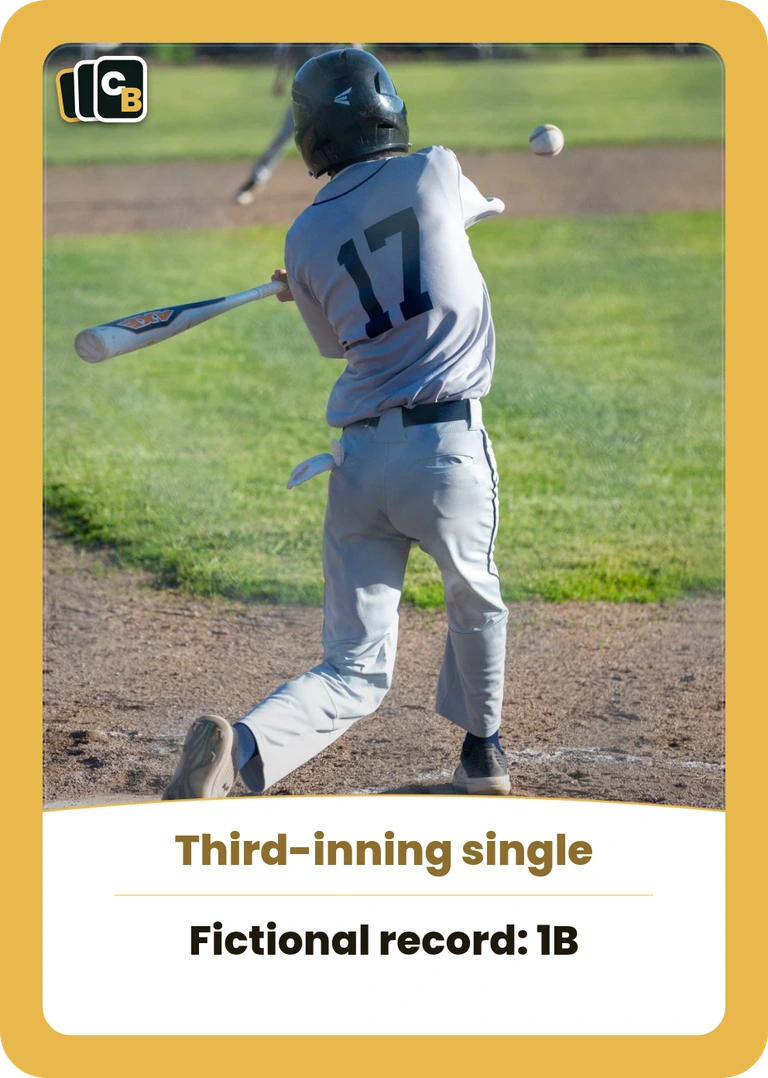
Third-inning single
Fictional record: 1B
The first-base coach waved both arms before Avery reached the bag.
View back of Third-inning single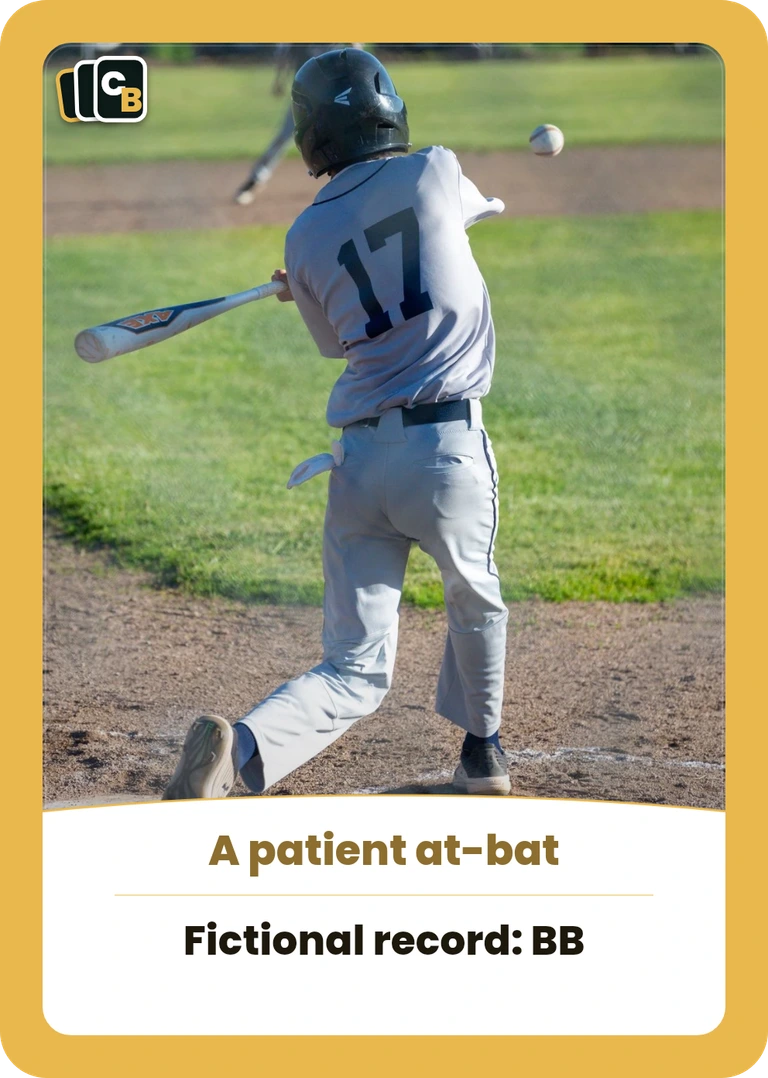
A patient at-bat
Fictional record: BB
The bench got quiet for ball four. Avery took a breath and walked.
View back of A patient at-bat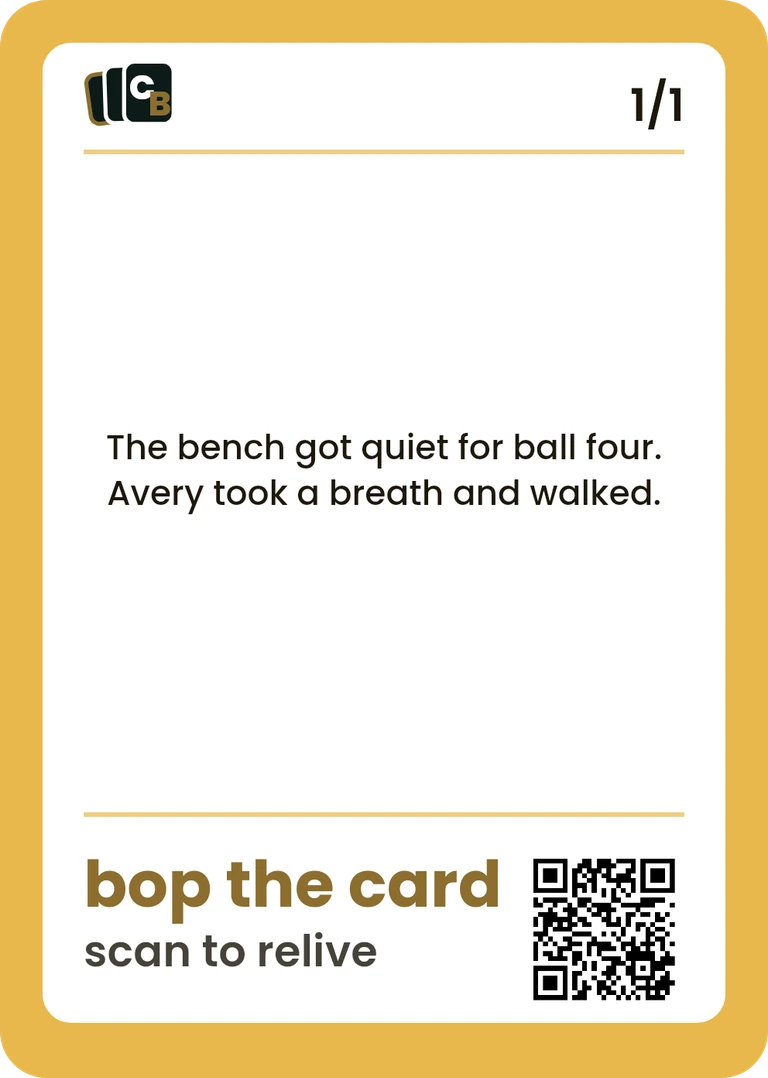

Ready for the next play
Scorer’s mark uncertain
We remember Avery backing up the throw and settling the infield.
View back of Ready for the next play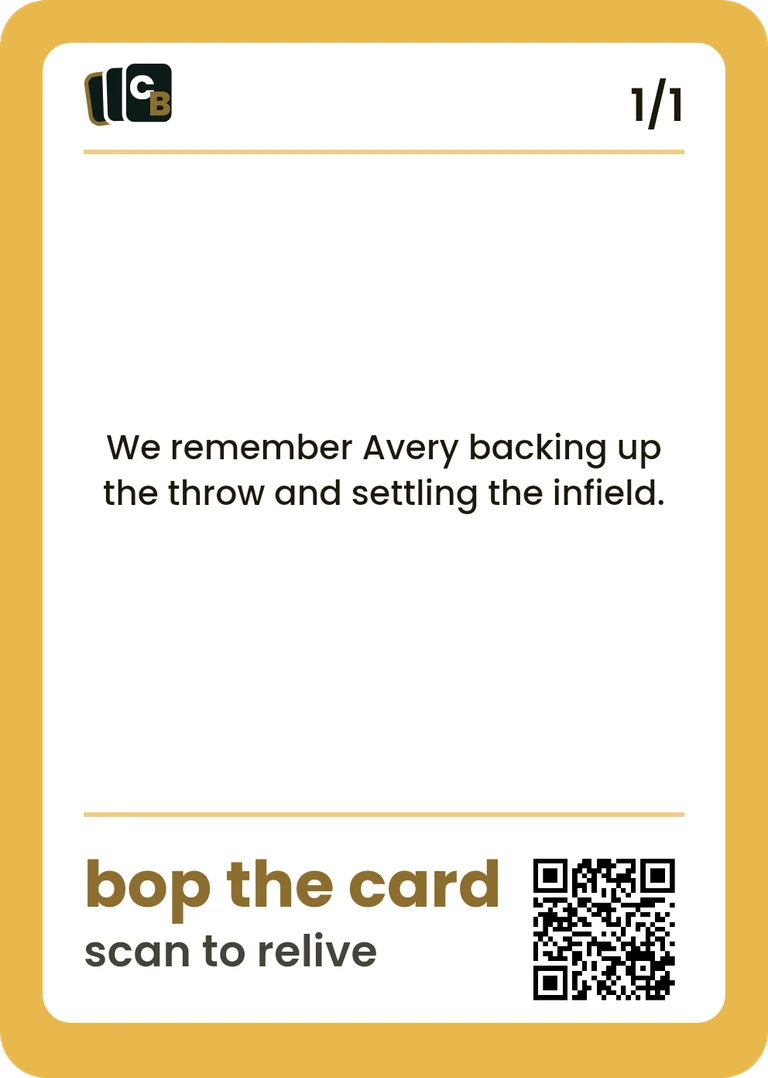
Frequently asked questions
What should I write if I can’t read the scorer’s mark?+
Use a note you witnessed, such as a patient at-bat or helping the next hitter get ready. Confirm what you can and leave the disputed number out.
Try a card with your own details
Use the worksheet or one of the examples above to plan your wording, then add your own permitted image and check both sides in the preview.
Free to design · No account needed to start · Preview before ordering.